The rate of descent is absolutely astonishing, 8km -> 1km in 20 seconds, then just hovers above the water. Absolutely incredible work by the SpaceX team.
Living in central Florida I cannot wait for the new launch facility to come online. We're going to have lines of spectators into the space coast like we did for the shuttle.
If any of you are heading to Disney World you should stop by the NASA Kennedy Visitor Complex, it is so well done and not that expensive (it takes less time than 1 line at Disney world to get to :) ). It has the original launch control room for Apollo that you can tour, a Saturn V rocket that is laid horizontally and you can walk under, the crew module for the moon landing. My favorite part is the Atlantis shuttle suspended from the ceiling, they left it in its "raw" landed format with scorch marks and tiles, it looks absolutely amazing.
The 'worst' thing about watching space launches on streams is that you simply cannot grasp how ridiculously huge these things are. Even if, like in the stream today, you see a water tower for some scale, the size discrepancies just make it so hard to intuit. Starship is 121 meters high. That's something taller than a football field, jetting off into space! I've only gotten to see a decommissioned Space Shuttle in person, but that was also amazing. Even its fuel tank [1] makes you feel just tiny, yet it's merely 47m. Getting to see Starship live would be such an amazing opportunity.
This looks like one of the earlier prototype ships, when they were still working out the tile geometry, but still also wanted to do a dry run of stacking it.
I was pondering but given the guys in the picture are on cherry picker type cranes, I'm guessing the photographer was on another of those. The quality looks a bit high for a drone.
There are drones which carry full DSLR cameras or even cinematography film cameras. I don't think you will be able to tell if the camera was hoisted by a crane or a drone based on image quality.
> given the guys in the picture are on cherry picker type cranes, I'm guessing the photographer was on another of those
I don't think so! That picture appears to be the fitment check of SN20 with B4 on 06th of August 2021.
As you can see the stack is standing next to the integration tower. If I were to hazard a guess most likely the photographer was on the tower. One could attempt to verify this by matching the terrain in the background with the view one would expect from the integration tower.
whereas from the tower it would be looking north east.
Even if you can get the resolution from a drone camera, the shot looks like someone spent quite a while lining everything up to look nice and like the historic NY pic.
> Re image quality, beyond the resolution it looks like someone spent a while getting things lined up nicely?
I don't know. There are really good drone photographers. They have remote controls for all the settings, and remote viewing is also possible. They could have lined it up with the drone. Or made the photo with even higher resolution and cropped it to perfection. Or made hundreds of photos and selected the best.
Not saying it was a drone. But the "quality looks a bit high for a drone" is not convincing me.
> given you can see the beach with a car to the left of starship and land to the right it suggests the camera was looking south west whereas from the tower you'd be looking north west.
I think you are right. Now based on that I think it was probably not photographed from the integration tower.
The reason I don't think it was shot from a fourth cherry-picker is because I can't see a fourth one in any of the photos. It seems they only had 3 up on that day and they were all in the frame.
Not to mention the sight itself is much less notable than the sky-tearing pressure waves you experience when you’re on-site. As soon as those engines fire up it’s very obvious why it’s so much different from watching it on a screen - the sound. The sound is so immense that it almost acts as a sort of audio silhouette that reveals the curvature of the earth if you listen closely enough.
I only live close enough to be able to see Enterprise, which didn't go to space, but I like to go there at least once a year, just because seeing the sheer size of it and knowing that all the Shuttles were like that is inspiring (the SR-71 helps too). I'm planning a trip to the space coast when family visits next year though.
The SpaceX drone ships are named after spacecraft from The Culture series by Iain Bank. The Culture is very much a socialist post-scarcity civilization where intelligent machines do all the work and most people apparently just party or do passion projects.
Like Star Trek, most of the action occurs where this civilization comes in contact with its barbaric neighbors. Unlike Star Trek, The Culture is very keen on interventionism and many of its characters volunteer for these dangerous foreign assignments because of their ennui/restlessness with their utopian society.
Musk's private wealth management firm, Excession LLC, is also based on the series.
Work around ships and those rockets will seem very much smaller. Try walking under the hull of a tanker in drydock. While we call SpaceX rockets "big" by aerospace standards, they land on barges we call "small" by maritime standards.
Standing next to the S-IC stage from the Saturn V at Kennedy really puts it into perspective. And the Starship full stack is larger and taller than the Saturn V!
I have to admit that i found the statue of Liberty much smaller than I expected.
Many things are larger than the statue, even when including the pedestal.
Or, could it be the genuine excitement of the SpaceX team that was getting captured in the stream? As the commentators mentioned, the team were able to read the telemetry data even when the onboard camera became dysfunctional. And, I'm sure that lots of viewers were also cheering for the flap.
What is even more impressive to me is that they were able to quite reliably stream all this through Starlink. This shows how mature and usable Starlink is. The fact that you can have live internet connection on re-entering space ship - truly the future is here.
As long as they stay sane and reliable they will have nothing to worry about. Internet connectivity is too important to rely on service that can be taken away without notice by one irrational angry tweet or xhit or whatever they’re called now.
According to Elons tweet, they had 11 internal cameras streaming. Add to that the 2 external cameras and all the telemetry, that's some damn good bandwidth.
Well, yeah it was reliable but with a lot of artifacts
I honestly couldn't make out much of what was being shown at those last moments. And I'm curious why SpaceX didn't have a ship there at the expected landing site to assess the landing (maybe they thought it wouldn't make it)?
It was a great event, surely, but it would have been nice to have a 3rd person view of the landing (you have the diagram at the bottom but it's not the same thing) .
They don’t have a ship there so burning rocket debris doesn’t kill people. Once they’re confident they can land it in a specific place in one piece, expect them to drop it with cameras present.
The issue at the end wasn’t as much artifacts as it was the camera housing getting blasted during the descent. It visibly cracked as the fin caught fire.
Not to down play StarLink, but actually... this amazing impressive reliable video stream is capable from any orbiting satelite. What's different here is that Starship is so massively huge, something like several meters in diameter, like maybe 7~9 meters, or something like that. Anyhoo, that the interference from the plasma envelope... does not fully envelope the whole rocket. There is a bunch of surface on the backside of the rocket not subject to the plasma, which is something liek fire made of electrons stripped from their atomic nuclus, and so causes elctromagnetic effects. Since the plasma doesn't go all around, any satelite can communicate, not just Starlink.
The restricted geometry means that Starlink is the only constellation with enough coverage to keep the link up (and even then it can't get a connection for moments of the decent). It's completely accurate to say that only Starship and Starlink could pull this off. You would have to imagine a fictional constellation to say "any satelite can communicate".
Yes, a ship that big makes a big hole that physically allows the signals to escape the plasma envelope, but beyond that, it has to have a coherent signal with enough bandwidth for us to watch the video in high definition in near realtime, whilst thundering through the atmosphere at 20,000kph at the same time parts of the ship are being torn apart from the stresses of re-entry, which I find is astonishing.
I very much doubt that the same bandwidth and signal reliability is currently available from just "any orbiting satellite" outside of some military constellations.
For anyone who has been there more than a couple years back, it's worth checking it out again. They added Gateway: The Deep Space Launch Complex, and have also been expanding the Astronaut Training Experience. The exhibits are all very well done.
The bus tours are also neat, visiting and walking around launch pads from the early days of space exploration, seeing the bunker near a launch pad with ~8" thick glass and the mechanical linkage over a couple hundred feet which let them monitor the weight of the added fuel on an early mission.
I've gone 7 times since I was a child, and love the new things I find.
Only the V2 is a rocket, the V1 is a flying bomb. They're both terror weapons, as actual products they have no direct military value, they exist solely in order to scare the shit out of enemy civilians, but liquid fuelled rockets are an invention with a whole lot of interesting practical applications - the V1 is just a bad idea (unless you have unlimited resources, which the Germans did not, and your goal is to terrify enemy civilians, which is not a legitimate military strategy).
It was an ancestor of things with military value, but it had little to none itself. You need a guidance system for a useful cruise missile, and the V1 had essentially none. No points for "military utility" as a "research program" when you're actively launching them at civilians; whatever it is, that's not a research usage anymore.
The German strategy was to pressure the British civilians into pressuring their government for an end to hostilities against Germany. They were demoralizing the British, and to that end the weapon was actually effective though the government did not capitulate.
Additionally, reports of damage to the British capital city was very morale-raising for the Germans who saw mostly the destruction of their own cities. That also has military value.
V1 launches begin in June 1944. One week after Overlord ("D-Day") and prompted by it. The obvious release for the London public's fear of these weapons was to destroy the capability not capitulate to Germany, and by October of the same year V1 launches against Britain were no longer possible because Allied forces controlled all the launch sites in range.
Weirdly, that's how it almost always works out. Didn't work in England, didn't work in Germany, not working in Ukraine. Kinda makes that "though" look silly in retrospect. That's why today we consider bombing civilians to have no military utility.
Yet you ignore some very well known successful recent bombing campaigns:
- NATO in Libya in 2011
- Operation Iraqi Freedom
- Operation Enduring Freedom (Afghanistan)
- US and coalition campaign against ISIS
- Saudi bombing in Yemen have pretty much stalled the Houthis.
- Russia in Syria for the last decade
- France in the Sahel
- The Turks in Iraq and Syria, been going on for almost a decade.
- Israel against Hezbollah in summer of 2006, didn't get the captured soldiers back but did stall the rockets against Northern Israel. And in Gaza in 2014, similar result in stopping the rocket attacks.
- Kosovo in 1999
That's all off the top of my head, though I did have to Google the names a bit. And it's all within recent memory, I remember every one of those conflicts. I'm sure some old timers here will mention quite a few more, spanning further back in time and further geographically.
Did they specifically work by making the citizens push the government to capitulate? For that matter, could any of them have been successfully carried out with V1's? I'm not familiar with all of those, but I would wager no, in which case they're irrelevant to my point.
No one sane is disputing that bombing can have value, but modern military bombing is done with (relatively) precise strikes against militarily useful targets, not indiscriminate attacks on civilians. When Israel bombs a civilian building, it's at least because they think there are Hamas fighters or weapons there.
You have added a long list. Yet it would be worth noting that, Afghanistan didn't really work very well, in that the said government just waited for the occupation to leave. ISIS didn't have any civilian leadership/structure in the first place, that can be asked by a civilian population to stop. Yemen is still controlled by Houthis and the less said about the bombing the better.
> and your goal is to terrify enemy civilians, which is not a legitimate military strategy
That just doesnt work, pretty much never. Yes civilians will be terrified but that is all you will achieve. It holds true during 2nd world war, it holds true now with every single ongoing conflict.
Going after civilians changes nothing, often results in the opposite - even harder resistance.
I think by "legitimate" they meant morally legitimate. Humanitarian, honourable, chivalrous, whatever you want to call it. Intentionally targeting noncombatants isn't any of those things, even if it's effective at demoralising the enemy.
Of course we bombed the hell out of German noncombatants too, so we don't exactly have an unsullied record.
V2 was of questionable legitimate military utility too. Sure you can hit a target the size of a city, but unlike carpet bombing, the payload isn't enough to guarantee that something specific is destroyed. So you can only use it to randomly harm civilians and maybe every once in a while hit a military target. Compare this with the Western Allies' approach where they also killed and maimed tons of civilians but at least stood some chance of also destroying the building-sized thing they were aiming at, given the stupefying tonnage of bombs involved.
Firebombing whole cities in Europe and Japan is still a black mark in US history. It’s really hard for me to get “holier than thou” on other terror campaigns when I remember that.
It's easy to say that now. Have you lived through unrestricted, total warfare, where one side intends to conquer a continent or the world, invades without provocation, and won't stop until brought to submission through extreme force? The Allies did not initiate war and did not want war. How many of your country's people should you sacrifice to end a war of aggression started by the enemy? Should you not use the means that will preserve as many of your lives as you can?
This century has yet to see anything like WW1 and WW2, and those who are alive today are incredibly disconnected from our recent past.
The firebombing of Dresden needlessly killed thousands of civilians, and arguably did nothing for the war effort. With the posisble exception of bolstering the resolve of front line German soldiers.
Had the axis powers won the war I'm certain it would have been classified as a war crime and Bomber Harris would have been the first against the wall.
Lol, what did the Axis powers care about "war crimes"? If they'd won they'd have had every Allied leader up against the wall on day one of the occupation, even if we hadn't killed a single "innocent" civilian. Why would they have needed a pretext?
We will never know, but I think it’s arguable that most of the terror campaigns by the allies came at the tail end of the war and were of questionable military effectiveness.
WW2 became a world war when Britain and France declared war on Germany. Of course, they could have stood back and let the Nazi's carry out their plan of annexing Eastern Europe, but they drew the line at Poland.
No, that’s when WW2 became a pan-European war. It became a world war when Japan attacked the British and Americans, thus combining the Anglo-German and Sino-Japanese wars into a single conflict.
It's arguable, WW2 is typically dated from the German invasion of Poland. By then, the war in Asia was already underway with the Japanese fighting in Asia. So with the British Empire, Germans and French and the Soviet Union also starting hostilities, much of the world was at war.
This is because the history of WW2 is usually told from a Eurocentric perspective. The Soviets weren’t fully involved until 1941 either, since that’s when Germany invaded them.
Calling it a single conflict is bit of hair splitting, japan had almost nothing to do with germany, especially after war started. Those were 2 separate conflicts happening at the same time.
Part of what combined the two conflicts, aside from Allied questions about resource allocations and priorities, was the supply lines of the British Empire. There was a continuous series of supply lines running all the way from England to Burma, through the Mediterranean and Suez Canal and down through South Asia. The Suez Canal (under threat from the Italians and Germans) was part of the exact same supply line as the Burma Road (under threat from the Japanese).
It's what Hitler was saying he wanted, Lebensraum for a new German empire by conquering the "inferior" people of Eastern Europe. Western Europe probably didn't expect to be invaded, and who knows what kind of alternative history would have taken place if Britain and France hadn't got involved. Perhaps the Nazi's would never have been satisfied unless they were at war somewhere, or perhaps they would have had their hands full in the east. Nato countries today probably assume that Russia invading Ukraine isn't a prelude for Russia attacking Nato countries.
> where one side intends to conquer a continent or the world
I believe this view indicates you may have drunk a bit too much of the kool aid. Germany had zero ability to hold all of Europe longer term, let alone the entire world. This is a comic book tier view. Any end to the war would have had concessions and land transfers but there is no precedent to suggest that even France would have remained under Germany longer term if the Germans had won. Western Poland and bits of other nations, sure, but that is hardly an entire continent or world. The notion that they were a serious threat to occupy the US is hilarious and goes to show how effective the fear mongering propaganda was and continues to be to this day.
> The Allies did not initiate war and did not want war
England and France declared war on Germany, not the other way around. Arguably the whole thing could have been avoided if England and France hadn’t backed Poland, which would have likely caused Poland to negotiate on the original land bridge problem rather than dig their heels in. It’s eerily parallel to the situation with Ukraine today, in fact.
That’s only if things actually stop at half of Poland, which is hard to imagine with a facist state. You kinda need (plausible) external enemies to keep your power.
It also just sets a bad precedent to let the bullies have their way. Though I’ll admit that it’s questionable whether it was worth it in hindsight, we have only one possible branch of history to compare.
The topic of discussion isn’t whether to invade! It’s whether there was a realistic threat of Germany invading either all of Europe or the entire world, and separately whether the allies were in fact practicing what they preached. That is what I was replying to in the GP, which I explicitly quoted! The goalpost move was the topic being changed from world invasion to Poland invasion.
Oh that’s fair, in my last comment I said “invade” which was careless word choice. What GP said and what I was reacting to was “conquer”, as in invade and then continue to occupy after the war concludes.
The France and Britain invasions were pretty straightforwardly defensive actions by Germany. They both allied with Poland and when Poland was invaded (an aggressive act by Germany) they declared war on Germany. What evidence is there to suggest that Germany would still have invaded France if France and Britain had simply abandoned Poland? Note that I’m not asserting that they “should have” abandoned Poland, just that the “we’ve got to stop them before they conquer the whole world” is almost always a bogeyman.
This line of reasoning is even more revealing when you realize how the western allies dropped Poland like a bad habit at the end of the war. The Polish government-in-exile that fought with the western allies never regained control of the territory of Poland -- the current Republic of Poland is not a continuation of the pre-war government or the government-in-exile. One could make the argument that the poles were just a convenient excuse for Britain and France to enter and expand the war.
Are you suggesting that the west should have gone further and declared war on the USSR after Germany's defeat, such that, it is consistent with the view that Poland should exist with its pre-war government, otherwise, the governments of the west are just hypocrites? Was the cold war not hot enough such to meet this bar? These glancing apologies for Germany's actions in WW2 seem ludicrous.
I believe the idea is realistically more that the allies should not have declared victory as they did, if a free Poland was truly their goal.
If you fail to achieve your stated goal and you still declare victory, you are either lying about your goal, or you are lying about your victory.
Invading the USSR probably wasn’t the most efficient way to ensure a free Poland. Have you heard of negotiation? Did the USSR really not want anything that the Allies could give to ensure a free Poland? Or did the Allies simply not value a free Poland enough to give up something big enough? If it was really their main reason for entering the war, don’t you think the negotiations math would have worked out differently?
While that can be an interesting lens (though I think it erases material context), the point I was discussing was not about the validity of someone declaring victory, but rather, about countries invading their neighbors.
> It’s eerily parallel to the situation with Ukraine today, in fact.
I'm sorry, but this is not a realistic view of what transpired. Russia was and continues to be an opportunistic colonialist. They keep moving territory markers overnight in Georgia. Crimea/Donbass didn't happen because of some breakdown in some peace treaty. The last minute deal offered and wasn't accepted right before the 2022 invasion that some blame Ukraine on was awful in every possible way. It would have neutered Ukraine militarily and required a puppet government subservient to Russia be installed.
> one side intends to conquer a continent or the world, invades without provocation, and won't stop until brought to submission through extreme force? The Allies did not initiate war and did not want war.
"The Allies" included the Soviet Union, which did initiate war--against Finland, against Poland, against Japan (this in the 1930s, before historians say WW II started)--and wanted even more war, hoping that all of the capitalist countries would destroy each other and leave the USSR to take over. And as others have pointed out, the USSR ended up in control of Eastern Europe, which was supposed to be liberated from tyranny--that was the original reason for Britain and France declaring war on Germany when Poland was invaded--so WW II actually failed at its primary objective. Even if you make the argument that Allied firebombing raids were a justified war measure, that argument only works if the war succeeds at its objective. If it fails, that argument falls to the ground.
Is that meant to be an oblique reference to the meme that America "initiated war" with Japan by choosing not to literally fuel Japans imperial ambitions? This reddit take is the most moronic of them all (and if this is what you're talking about, you got the decade wrong.) Japan was not entitled to foreign oil, nor the foreign land they intended to take by force using that oil, and America choosing not to give it to them was not a declaration of war. The war between Japan and half the world was started by Japan's own ambition.
If you wanted to make the case that America started it you would have to go back to the 1850s when America rudely introduced them to modern gunboat diplomacy. But for that argument you would need to read a damn book instead of parroting any fool opinion you learned on Reddit.
No. I meant exactly what I said. I didn't say anything about Japan except that the USSR attacked them--more precisely, they attacked the Japanese troops in Manchuria. Not just in 1945--in the late 1930s.
Okay, so the Soviets attacked the Japanese after the Japanese started their invasion of China, and that is meant to somehow reflect poorly on America? Get a fucking grip, stop huffing weeb fumes.
It is indeed very weird to claim that UK and France have won in WWII, when they had initially declared war in order to fulfil they alliance obligations toward Poland and Czechoslovakia, but the result of WWII was that both Poland and Czechoslovakia have lost large parts of their territories (like also others of the former allies of UK and France that happened to be neighbors of the Soviet Union).
UK did not won anything in WWII. They have just preserved their integrity like someone whose home was under attack by a gang of robbers and murderers, but they got rid of the attackers by paying another gang of robbers and murderers to do most of the work, and the payment was done not with their own money, but with money stolen from other assault victims (i.e. by giving to Stalin the Eastern Europe, which was not the property of Churchill, for him to have any right to give).
Poland was much luckier than all the other neighbors of the Soviet Union, because much of its territorial loss has been compensated with territories taken from Germany. Therefore, when one compares pre-WWII with post-WWII Europe maps, at the first glance Poland does not seem to have changed much in size. However, after a more thorough look, it becomes obvious that Poland has moved on the map from east to west.
Japan was already trying to negotiate conditional surrender when Hiroshima and Nagasaki were nuked. The US demanded unconditional surrender, and they nuked hundreds of thousands of civilians to force that demand.
The bombing of Dresden is arguably a war crime by todays standards. It was unnecessary.
Remember that we were allied with the Soviet Union (Joseph Stalin was the "good guy" on our side). After WW2 he was given half of Europe as a reward, forcing that half of Europe to become communist, and the Soviets got to write the history books about Germany and WW2. Not the most transparent and unbiased source of information.
The Soviets and other allied soldiers (the good guys) also had a free-for-all with the German ladies after winning the war.
"The majority of the assaults were committed in the Soviet occupation zone; estimates of the numbers of German women raped by Soviet soldiers have ranged up to 2 million"
Japan should have unconditionally surrendered in March, half a year before the nukes, when the US military burned most of Tokyo to the ground in less than two hours.
And yes. Stalin was a bad guy and it's a pity the war didn't end with the demise of both the Nazi and Soviet regimes. This is also irrelevant to the matter of strategic bombings perpetrated by America and Britain.
"We may have been fighting the wrong enemy (Germany) all along. But while we're here (on the Soviet border), we should go after the bastards now, 'cause we're gonna have to fight 'em eventually."
I literally just told you that the Soviets should have been taken out. This fact doesn't change the moral calculus of the strategic bombings against Germany and Japan. The fault was not doing the same to the USSR.
I understood what you wrote. The interesting part of this quote is apparently General Patton also realised they should not have been fighting against Germany in the first place. There are other quotes from him that indicate some regret of fighting against Germany instead of the Soviets, by the end of the war.
Conditional surrender would have been completely unacceptable given that they were the aggressor and had a million troops in China, and wanted to hold on to their conquests after the war. Even after the first nuke they didn't surrender. It took the emperor speaking up - for the first time ever - after the second nuke, and even then the military junta tried to stop it.
Your points about the Communists stand, but keep in mind that the West always considered them the least bad option. They started out on Hitler's side and they only got half of Europe because they already had it occupied with masses of troops. The West couldn't have pushed them back to Moscow unless they were willing to fight a couple more years, killing millions more.
> Even after the first nuke they didn't surrender. It took the emperor speaking up - for the first time ever - after the second nuke, and even then the military junta tried to stop it.
All this is true, but it's also true that the nukes weren't the only factor involved. A good case can be made that it was actually the Soviet invasion of Manchuria, which started at midnight local time on the same morning that Nagasaki was bombed, that gave the peace faction in the Japanese government enough leverage to get the Emperor to intercede. The Japanese still weren't exactly sure what the nuclear bombs were, and they had already been firebombed for months so having two more cities incinerated was not the huge change that later US propaganda made it out to be. But the Japanese had been trying for many months to get Stalin and the USSR to broker a peace agreement, and Stalin and Molotov had been stringing them along without any real intention of helping, to ensure that Stalin would have time to enter the war against Japan. The Soviet invasion of Manchuria shocked the Japanese government into realizing their true position and made surrender an urgent priority since Japan greatly preferred being occupied by the US to being occupied by the USSR. The nuclear bombs were a convenient way for the Emperor to save face and not have to admit that it was really the strong desire of the Japanese to surrender to the US and not to the USSR that drove the decision.
See the excellent book Racing the Enemy by Hasegawa for a detailed and thorough exposition:
This is an excellent point. This is why it was necessary to beat the Germans first - so the Russians could invade or at least threaten Japan.
Even so, a land conquest of Japan would have cost vast numbers of lives - far more than the nukes.
When people die one by one in war, the emotional impact is blunted. But when a million die in one bomb, it seems much worse, even if the overall body count is lower.
> This is why it was necessary to beat the Germans first - so the Russians could invade or at least threaten Japan.
That was the strategy that FDR and Churchill agreed to, but the primary person driving it was Stalin, because he didn't want the US and Britain to defeat Japan before he got a chance to attack them, and he knew he would not be able to attack them until Germany was defeated. (He wanted to attack them so he would have a pretext for taking over territory that Russia had lost in the Russo-Japanese war in 1904-1905.) As events proved, the US and Britain did not need any help from the USSR to defeat Japan militarily, and with different diplomatic choices they probably could have gotten Japan to surrender before the USSR attacked.
Once FDR died and Truman took office, btw, it was no longer clear that having the USSR enter the war against Japan was a US objective. Truman, unlike FDR, was not a fan of Stalin and viewed him as a geopolitical threat, not an ally. Which, historically speaking, was a sounder view.
Soviet Union were preparing to invade Hokkaido. My grandfather was staged near Vladivostok and everybody in Soviet military there in summer 1945 expected there would be invasion of Japan.
Japanese knew that Soviet rulers did not care if another million of soldiers died and Soviet occupation was considered much worse outcome. That contributed to their surrender to US.
This is from the final episode of the series. Easy Company have fought their way from Normandy to Germany, losing hundreds of their friends and brothers in battle after brutal battle. Now the Nazis have surrendered and they finally have some respite - but their celebrations are shortlived. Their commanding officer informs them that they're to be redeployed to the Pacific. The war isn't over, and the expression on Malarkey's face at 2:09 says it all.
Whatever anyone says about the atomic bombings, I bet those men were damn happy to hear about Japan's surrender. Imagine if they'd been sent to invade Japan, in another brutal campaign that would have taken months if not years, costing hundreds of thousands more Allied lives.
Then imagine telling them that the government had secretly developed a powerful new weapon that could have ended the war earlier and avoided all this bloodshed - but they hadn't used it because they were worried about the moral implications. I don't think they'd have agreed it was the right choice.
The emperor directly mentions the atomic bomb in his address;
"Moreover, the enemy has begun to employ a new and most cruel bomb, the power of which to do damage is, indeed, incalculable, taking the toll of many innocent lives. Should we continue to fight, not only would it result in an ultimate collapse and obliteration of the Japanese nation, but also it would lead to the total extinction of human civilization."
He only tacitly mentions the battle situation;
"But now the war has lasted for nearly four years. Despite the best that has been done by everyone – the gallant fighting of the military and naval forces, the diligence and assiduity of our servants of the state, and the devoted service of our one hundred million people – the war situation has developed not necessarily to Japan's advantage, while the general trends of the world have all turned against her interest."
> The emperor directly mentions the atomic bomb in his address...He only tacitly mentions the battle situation
I know that. And I said why: to save face. He didn't want to tell the Japanese people that the Soviet invasion of Manchuria was the reason. The atomic bomb made a much better reason for public consumption. That doesn't mean it was the actual reason that drove the decision, which was made in private.
If the argument is that "We can't say that the atomic bombs were the catalyst for Japan surrendering because the surrender happened after a bombing and Soviet war declaration therefor they are confounding factors" then the same holds true for the argument that the Soviet invasion was the catalyst for surrender.
Now I will say that I have not read Hasegawa's book but Wikipedia says that it is "challenging the widely accepted orthodox view that the atomic bombings on Hiroshima and Nagasaki were the most decisive factor in Japan's decision to surrender ending the war against Japan."
It will be interesting to read but it looks like that it is not the accepted theory and that primary sources from the era were destroyed on all sides.
Hmm, the books I’ve read in Japan make it seem more like the emperor was just tired of an unwinnable war. The nuclear bombs and soviet invasion were simply a catalyst. They just got a surrender note from the US at the proper time for that to be the topic under consideration (aside from, you know, surrendering to the people that tricked you being a generally bad idea).
I like how they ultimately accepted the unconditional surrender, but still tacked on a condition that the emperor was not to be blamed.
Maybe. He was pretty young at the time, and surrounded by old guys telling him what to think.
Contrary to what this article says, I’m absolutely convinced that not prosecuting the emperor was the right call. The country would have more or less literally exploded overnight.
The fact the man himself told everyone to surrender was of more importance than almost anything else done, both at government and civilian levels. Most of the internal efforts to stop the surrender were around stopping him from declaring as such.
The last conditional surrender before atom bombs were dropped on Hiroshima and Nagasaki, that was the only condition. There were previous conditional surrenders. They wanted to drop those bombs though.
1. Invade. Expected Allied casualties of 300k all the way to much more than a million. Expected Japanese casualties: tens of millions, perhaps up to literally all of them. Previous Japanese strongholds fought to the last man, earlier in the war the Allies invaded an island with 11000 Japanese soldiers, and I think 47 of those eventually surrendered. The rest died. The civilian populations on these islands infamously committed suicide in huge numbers rather than be captured by the Allies. How much harder would an invasion of the home islands be!? The Japanese government issued an order that every single person must fight to the death.
2. Starve them out. The allies had submarines all around Japan and completely blocked all food and oil imports. This was working. But given the Japanese fighting spirit, likely tens of millions would have died before any change took place. It's also possible that the population could drop so low that the islands would become self-sufficient and then the war would drag on literally forever.
3. Conventional aerial bombardment. The Allies were already trying this with great gusto, to little diplomatic effect.
4. Demonstration nuke off the coast. The Allies only had two nukes left after the test one, and weren't 100% sure it would work. A failed demo would only strengthen Japanese resolve. There were concerns whether one demo nuke would be scary enough to force a surrender. Given that one actually used nuke wasn't, these concerns turned out to be valid.
5. Actually drop a nuke. This option turns out to have had the lowest bodycount in the end and had the unexpected side-effect of ushering in an unprecedented era of global peace.
> Starve them out. The allies had submarines all around Japan and completely blocked all food and oil imports. This was working. But given the Japanese fighting spirit, likely tens of millions would have died before any change took place. It's also possible that the population could drop so low that the islands would become self-sufficient and then the war would drag on literally forever.
Probably the biggest share of the blockade at the end was done by naval mines. At the end, the US airdropped naval mines in Japanese harbors to prevent them from importing food, and this sunk more Japanese shipping than the submarines ever did. It was even called “Operation Starvation”.
"Commit less atrocities" in this case is just code for permitting others to commit whatever atrocities they want. American "atrocities" against Japan pale I comparison to what the Japanese were inflicting on the rest of Asia.
It's not a code. It's literally saying leave doing bad things to bad guys. Instead just becoming one of them but being proud about it because your atrocities were somehow better because the cause justifies the means and your cause is just. By that logic jihad is fine.
Have you noticed how in history good guys always eventually won every major conflict? What are the odds? 100% if you paint a bullseye after you shot.
The firebombing of tokyo killed 200K people, more than both nukes. the firebombing was an attempt to end the war via conventional means and it did nothing to weaken japanese resolve.
The reason hiroshima and nagasaki (small cities) were chosen as nuke targets was because every other bigger city was already mostly destroyed due to firebombing campaigns.
I am not sure how this is relevant to the point I made. Lots of people died. You still don’t know (and never will) how much would have died due to the other options. It’s speculation at best.
Your survey of the options is basically the one that the US government put out after the war to push back against criticism. However, historical scholarship since then has shown that it wasn't that simple.
First, there is no evidence of any actual casualty estimates made during the war that were anywhere near as high as the ones you give in option 1. Those numbers were made up after the war. The wartime estimates were about an order of magnitude lower.
Second, you left out an option: clarify the status of the Emperor if the Japanese surrendered, which the US government well knew, since they were reading Japanese diplomatic traffic and also had plenty of intelligence from spies, was the only real obstacle in the way of the Japanese surrendering. The final surrender agreement left the Emperor in place as the head of the Japanese state. If the Japanese had known that was going to be the final outcome of surrender earlier, it is highly probable that they would have surrendered earlier. The status of the Emperor was the primary weapon the military war faction in the Japanese cabinet used to quash surrender proposals.
Third, to call the time since WW II "an unprecedented era of global peace" is a bit much. What the bombs ushered in was an era of nuclear stalemate. The US does deserve credit for not using the bombs again, even though the US was the only nuclear power for at least four years after WW II. It is also true that many people after WW II expected a nuclear conflict to happen as soon as the USSR got nuclear weapons, and none did. But that didn't stop plenty of conventional conflicts from continuing to break out all over the world, nor has the US kept out of such conflicts.
First, the casualty estimates are just for US soldiers and is likely low. They fough against Japanese troops with a kill ratio of between 1:1 and 1:20 (in favor of the Marines) so it’s easy to extrapolate massive US casualties when fighting the then 80 million strong Japanese on home soil.
I don’t know much about the second point, so you may be right.
Third, you have to look at stats, not emotions. Battle deaths - in absolute terms and per capita - dropped like a stone after 1945.
> My original and subsequent posts were that the nuke made the world safer. Post-1945 battle deaths dropped to near-zero by comparison to pre-1945.
Post hoc ergo propter hoc is a well known logical fallacy. That is what you are doing here.
Also, the relevant comparison, as I said before, is not post-1945 vs. pre-1945. It is something like post-1945 vs. pre-1914, so that the comparison involves peacetime conditions on both sides.
I’m claiming a direct causality between how terrible the nukes were and how peaceful the subsequent decades have been.
The cold war was cold because of M.A.D.
And I will compare any periods I want. The nukes fell in 1945, so I compare all of human history before that and after that. There’s a clear and massive decline even if you only look at pre-1914 rates.
Only the emotional impact was different. A nuke was an otherworldly weapon that marked a technological superiority that was impossible to overcame during the war, hence the surrender. Carpet bombing would have to go on until enough Japanese cities and industries were reduced to hash. Then maybe an invasion. As somebody pointed out, the surrender of the Japanese troops in China was a goal of the war and they could not carpet bomb or nuke China.
Only because the US froze all trade with Japan and intentionally refused all Japanese attempts at diplomacy to negotiate some kind of arrangement. The US did that knowing that the Japanese government would go to war, since the US had broken the Japanese codes and was reading all Japanese diplomatic traffic. In other words, the US intentionally provoked Japan into going to war.
Yes, they froze Japanese trade. But only to stop outrages being committed all over the area, including annexing Manchuria and invading China. The Japanese were doing all of this with imported US oil. Stopping the oil exports hardly places responsibility for Pearl Harbor on the US.
If those things the Japanese did were "outrages", so were the things the US, Britain, and other European countries did to build their empires. The Japanese viewed their actions as simply taking their rightful place as an imperial power alongside those other countries. Yes, by today's standards, or at least today's Western standards, such things are Not Done, but if we are going to judge WW II Japan by those standards, we should judge the WW II Allies by those standards too.
> Point me to the rapes of Nanking the allies did.
The Soviets were allies. Look up what they did in Germany at the end of WW II. And that's not even looking at all the other atrocities they had perpetrated before the war started, many of them on their own people.
Also, the empire building I referred to on the part of the US, Britain, and other European countries took place well before WW II. That doesn't mean it can just be ignored.
> Or maybe just stop spreading Soviet propaganda.
It seems to me that you are the one spreading Soviet propaganda since you are not even acknowledging the moral implications of having the Soviets as allies in WW II.
> stopping all Axis aggression in WW2 was good for everyone
Stopping Axis aggression against the US, Britain, France, and other Western countries was good for everyone.
Stopping Axis aggression against the USSR? I'm not so sure. Particularly not since the price of doing that was condemning Eastern Europe, China, and a good chunk of Southeast Asia to tyranny.
And with it, the enactment of the Final Solution in its territories.
Are you sure you mean to say that you're "not sure" if stopping this project in its tracks was a good idea or not?
We know that this wasn't the primary motivation behind the decision of the Soviet-Western alliance, of course. But it was indisputably one of the key outcomes of the war and that cooperation.
Yes it does. Moral progress is a real thing. Standards rise over time. Alexander the Great would be a war criminal today, and yet he was considered a relatively easygoing ruler at the time.
> Allies did not initiate war and did not want war.
An argument made that WW2 was continuation of WW1 and that WW1 was wanted by British leadership who were locked in an arms race with Germany that they could not sustain much longer and wanted a war with Germany while they were ahead so the assassination that triggered WW1 was the pretext tobstart WW1. If you disagree please try to answer why leaders are regularly assassinated and that does not cause a world war.
Listen, while I broadly agree with your grander point (Britain wanting a war with Germany and taking any excuse given for it) your argument for this is flatly moronic; the assassination of the archduke was not Britain's pretext for entering the war! That was Austria-Hungary's pretext for invading Serbia. Britain's pretext was the German invasion of Belgium. Read a fucking book.
While Britain's decision to enter World War I was indeed triggered by Germany's invasion of Belgium, it's important to consider the broader context. In the years leading up to the war, Britain had engaged in a naval arms race with Germany, driven by fears of Germany's growing military and economic power. British leaders, including Foreign Secretary Sir Edward Grey and First Lord of the Admiralty Winston Churchill, viewed war with Germany as inevitable and believed it was better to fight sooner while Britain still held a naval advantage.
Britain's system of alliances, particularly the Entente Cordiale with France and Russia, made it likely that any conflict involving these powers would draw Britain into a larger war. When the July Crisis erupted following the assassination of Archduke Franz Ferdinand, British leaders did little to prevent the escalation of tensions. Despite last-minute efforts by some, such as German Chancellor Theobald von Bethmann-Hollweg's plea for British neutrality, Britain remained committed to its alliances and the belief that war with Germany was necessary.
It's worth noting that other European leaders, such as French President Raymond Poincaré and Russian Tsar Nicholas II, also played significant roles in the outbreak of the war. However, Britain's long-standing rivalry with Germany, its naval arms race, and its commitment to alliances that would likely trigger a larger conflict all contributed to its readiness to enter the war when the opportunity arose.
There’s a much simpler theory of the war, which is that it was Germany that was worried about a foreign rival catching up to them—Russia—which is why Germany pushed for the war to start. It’s interesting to see this theory projected onto the British, but there’s a fatal flaw with this projection. The first declaration of war was by Austria-Hungary against Serbia. Britain was not in a position to manipulate the situation as to encourage that; Germany was. And Germany would have known that an Austro-Hungarian war on Serbia would draw in Russia, which is how they get the Russo-German war they actually wanted.
How, exactly, mechanistically, does Britain manipulate this crisis into an Anglo-German war? They didn’t make Austria-Hungary declare war. They didn’t even declare war alongside the French. And they certainly didn’t make Germany invade France by way of Belgium in order to give Britain a pretext. It sounds to me like Germany wanted war with Russia and was confident they could also afford war with France (having kicked their asses in 1870 already) but would have really preferred to keep Britain out of it.
If there is a criticism one can levy against the British, it might be that they simply weren’t forceful enough in making that consequence clear to the Germans ahead of time. The “alliances that would likely trigger a larger conflict” were in fact a consciously designed system of balances of power meant to deter exactly that type of large scale war, in the tradition that was established 99 years previously in the wake of the Napoleonic Wars. It’s easy to dismiss that system because it failed catastrophically in 1914, but the fact that it had mostly worked since 1815 was unprecedented in European history. The 99 years between the Napoleonic and First World Wars were the most peaceful 99 years of European history since at least the Roman Empire; check back in 2044 to see if we can break that record.
> The 99 years between the Napoleonic and First World Wars were the most peaceful 99 years of European history since at least the Roman Empire;
You make a good point about the "Long Peace" between the Napoleonic Wars and World War I. While there were indeed several conflicts during this period, they were generally shorter and more localized.
The Revolutions of 1848, which affected many European countries.
The Russo-Turkish War (1877-1878)
The Serbo-Bulgarian War (1885)
The Greco-Turkish War (1897)
And there are others that I missed
> Germany wanted war with Russia and was confident they could also afford war with France (having kicked their asses in 1870 already) but would have really preferred to keep Britain out of it.
Yes I also agree however had Britain remained neutral and not created alliances that it knew would put it in conflict with Germany is it possible that the Germany vs. Russia conflict might have remained a regional war (like others I mentioned above) and so continuing the so called “long peace”? Instead there was an escalation to a global conflict. So what motivated Britain to make these alliances that caused the escalation? Is there a better explanation than “Thucydides Trap”? (See my sibling post about this.)
“Thucydides Trap" suggests that when a rising power threatens to displace an existing great power, it often leads to war. Russia, Britain, and Germany found themselves in this predicament before World War 1, with each nation acting rationally to protect its own interests. However, the complex web of alliances and the fear of losing power ultimately led to a global conflict that no one truly desired.
For instance, the Franco-Prussian war of 1870, where the German Empire you seem to idolize was effectively born. Also the same war that gave the German Empire a degree of overconfidence about their chances against France.
> however had Britain remained neutral and not created alliances that it knew would put it in conflict with Germany is it possible that the Germany vs. Russia conflict might have remained a regional war (like others I mentioned above)
Did Britain create the alliance between France and Russia? They certainly weren't a party to it, because that wasn't their casus belli for entering the war. Their casus belli was the German invasion of Belgium. My contention is that if Britain was less neutral and more proactive about creating alliances that could put it in conflict with Germany, they could have successfully deterred the First World War.
> Did Britain create the alliance between France and Russia?
Britain did not create the alliance between France and Russia - that alliance was formed independently in 1894 as a counterweight to the Triple Alliance of Germany, Austria-Hungary and Italy. Britain's casus belli for entering WWI in 1914 was Germany's violation of Belgian neutrality, not any direct alliance obligations.
However, I would argue that Britain's shift away from "splendid isolation" and toward the Entente with France and Russia in the early 1900s, while stopping short of hard alliance commitments, still had the effect of emboldening France and Russia in their disputes with Germany and Austria-Hungary. The Anglo-Russian Convention of 1907 in particular eased long-standing tensions between Britain and Russia.
So in that sense, while Britain didn't create the Franco-Russian alliance, British diplomatic moves in the pre-war years did strengthen the Entente bloc and alter the balance of power in a way that made France and Russia less likely to back down in a crisis. A more fervently neutral Britain may have left France and Russia feeling less confident.
> My contention is that if Britain was less neutral and more proactive about creating alliances that could put it in conflict with Germany, they could have successfully deterred the First World War.
In the lead-up to WWI, there was a prevailing belief among European powers that any war would be short. Many did not foresee how devastating and prolonged the conflict would become. So even a more hardline British policy may not have been seen as a strong enough deterrent in 1914.
Additionally, a more assertive Britain risked further inflaming tensions and sparking a crisis. The European alliance system meant any conflict had the potential to spiral out of control - more British alliances could have simply added fuel to the fire. And if war came, Britain would then be obligated to join from the start, rather than having the option to stay out.
> German Empire you seem to idolize was effectively born
I disagree with your characterization that I "idolize" the German Empire. My argument is that the outbreak of World War I was primarily caused by the "Thucydides Trap" dynamic - the dangerous instability that occurs when a rising power threatens to displace an established power. In this case, Germany's rise in the late 19th/early 20th century threatened the European balance of power that had long been anchored by British dominance.
I don't believe in the simplistic "evil Germans started WWI" narrative that was promoted by the war's victors. This narrative served to justify the punitive terms of the Treaty of Versailles placed on Germany, which most historians agree was a key factor in the rise of Nazism and the eventual outbreak of World War II 20 years later.
Portraying it simplistically as "evil Germans" against the noble Allies is not productive and does not do justice to the immense tragedy of the war and its aftermath.
My contention is we should strive to analyze this world-shaping event objectively and resist nation-centric narratives shaped by wartime propaganda. I believe examining it through the lens of great power competition and the "Thucydides Trap" is a more constructive approach.
If you have evidence showing that I "idolize" Imperial Germany, I would appreciate if you could quote where I expressed those sentiments. But I suspect this is a misreading of my arguments about the war's root causes.
> Britain did not create the alliance between France and Russia - that alliance was formed independently in 1894 as a counterweight to the Triple Alliance of Germany, Austria-Hungary and Italy. Britain's casus belli for entering WWI in 1914 was Germany's violation of Belgian neutrality, not any direct alliance obligations.
And the idea of maintaining a balance of power in the first place was part of the legacy of the Congress of Vienna following the Napoleonic Wars. It wasn't a uniquely British policy.
> However, I would argue that Britain's shift away from "splendid isolation" and toward the Entente with France and Russia in the early 1900s, while stopping short of hard alliance commitments, still had the effect of emboldening France and Russia in their disputes with Germany and Austria-Hungary. The Anglo-Russian Convention of 1907 in particular eased long-standing tensions between Britain and Russia.
> So in that sense, while Britain didn't create the Franco-Russian alliance, British diplomatic moves in the pre-war years did strengthen the Entente bloc and alter the balance of power in a way that made France and Russia less likely to back down in a crisis. A more fervently neutral Britain may have left France and Russia feeling less confident.
Germany's goal in 1914 was to attack Russia, so Russia's confidence is of little relevance. Do you have any evidence that France was more confident in allying with Russia because they felt they could trust Britain to help? Because that doesn't seem at all consistent with the history of Franco-British relations. And, as discussed above, it's also perfectly explainable in terms of maintaining the balance of power, which had been the consensus method of maintaining peace for the past century.
> I disagree with your characterization that I "idolize" the German Empire.
You're furthering a theory in which Britain is somehow to blame for the outbreak of the First World War. I assumed that your attempt to rehabilitate the historical legacy of the German Empire was motivated by some sort of fondness for the German Empire. If I'm mistaken, please accept my apologies.
> My argument is that the outbreak of World War I was primarily caused by the "Thucydides Trap" dynamic - the dangerous instability that occurs when a rising power threatens to displace an established power.
Yes, this was exactly the dynamic taking place between Germany and Russia.
> In this case, Germany's rise in the late 19th/early 20th century threatened the European balance of power that had long been anchored by British dominance.
There are multiple problems with this idea, most of which I have already enumerated, but I will re-enumerate them for your convenience:
* Britain and Germany operated in very different spheres. Britain was a global thalassocracy while Germany was a land power with mostly Eurasian concerns. Germany was attempting to develop sea power on their own, but they were never particularly close to eclipsing Britain on that front.
* Even if Britain had the goal of engineering the outbreak of a war with Germany, they did very little that contributed to the outbreak of such a war. Meanwhile, Germany took several such actions.
> I don't believe in the simplistic "evil Germans started WWI" narrative that was promoted by the war's victors. This narrative served to justify the punitive terms of the Treaty of Versailles placed on Germany, which most historians agree was a key factor in the rise of Nazism and the eventual outbreak of World War II 20 years later.
That's a non-sequitur; even if the Treaty of Versailles was too punitive, it doesn't follow that Germany didn't start the war.
(For what it's worth, the most punitive effects of the Versailles Treaty had been effectively waived or ameliorated long before the Nazis took power. The consequences of the Versailles Treaty did motivate support for the Nazis in the 1920's, but by the end of the 1920's, hyperinflation was over and Germany had successfully renegotiated itself into a much stronger economic position. What really helped the Nazis after that point was the start of the Great Depression. But this is a tangent.)
> Portraying it simplistically as "evil Germans" against the noble Allies is not productive and does not do justice to the immense tragedy of the war and its aftermath.
Some simplistic historical narratives also turn out to be mostly true. For example, would you make the same claim about the Second World War that you're making about the First?
I'm not particularly interested in moralizing about history. But here are the concrete actions Germany took which served to either start or expand the war:
* Germany gave diplomatic encouragement to Austria-Hungary to declare war on Serbia in the first place.
* When Russia joined the war in defense of Serbia, Germany responded by declaring war on Russia, knowing that Russia and France had a defensive alliance.
* When France joined the war in defense of Russia, Germany attacked the neutral country of Belgium.
Britain could have stayed neutral at this point, and yet a world war would have still broken out purely by virtue of Germany's actions. Let's contrast the actions the British took, which you attribute the outbreak of the war to:
* Britain eased tensions with Russia and improved relations with France. (Very strange to start a war by improving relations with your traditional enemies!)
* After Germany was already in a war with Russia, France, and Belgium, Britain entered the war and refused German demands to remain neutral.
My objection with your theory here is that you haven't provided any credible mechanism by which Britain could have possibly engineered the start of an Anglo-German war, particularly when the causal links in that chain included many actions that were entirely within Germany's control. Can you please address that particular objection? You can say "Thucydides Trap" until you're blue in the face but the facts don't fit the theory in this instance.
> You're furthering a theory in which Britain is somehow to blame for the outbreak of the First World War.
If you believe this you misunderstood me.
There was a regional war (the “long peace” had many of these) which only became a global war when the British empire got involved. What I pointed out was that British involvement was optional. The British Empire was concerned about maintaining a balance of power in Europe. German dominance threatened this balance hence the British empire wanting war with Germany and declaring war on Germany. Belgium was a convenient pretext.
> I assumed that your attempt to rehabilitate the historical legacy of the German Empire was motivated by some sort of fondness for the German Empire. If I'm mistaken, please accept my apologies.
My argument is that the outbreak of World War I was caused by the "Thucydides Trap" dynamic and I do not believe the simplistic “evil Germans were responsible”.
Nor do I believe the British or Russians were responsible. To cast blame is to misunderstand the "Thucydides Trap".
> Even if Britain had the goal of engineering the outbreak of a war with Germany, they did very little that contributed to the outbreak of such a war. Meanwhile, Germany took several such actions.
When above I said “WW1 was wanted by British leadership who were locked in an arms race with Germany that they could not sustain much longer and wanted a war with Germany while they were ahead” I did not say “Britain had the goal of engineering the outbreak of a war with Germany”. You misunderstood me.
> My objection with your theory here is that you haven't provided any credible mechanism by which Britain could have possibly engineered the start of an Anglo-German war, particularly when the causal links in that chain included many actions that were entirely within Germany's control. Can you please address that particular objection?
I may want a new car, however I am not going to get a new car unless my current car needs big repairs but I am not going to crash it for that purpose to “engineer” the situation. Similarly British leadership who were locked in an arms race with Germany (that they could not sustain much longer) wanted a war with Germany (they were ahead) but it would be foolish to engineer war on purpose.
At the start of WW1 the British Empire played a dominant role in the global economy -- it was perhaps about one-quarter to one-third of the global economy. Adding to this the economic contributions of English-speaking allies like the United of States of America, which was rapidly industrializing and increasing its economic output, the fraction could reasonably be estimated to range from approximately 30% to 40% of the world's GDP being either English-speaking or under British control at the beginning of World War I.
Would we call it a “world” war if 30-40% of world GDP was not involved? Did the British Empire have to be involved? Were they attacked? No, there was a treaty about keeping Belgium neutral that was used by the British to declare war on Germany. Did Britain have to declare war if it did not want war?
To help answer this question let’s look at a more recent example: the Budapest Memorandum on Security Assurances. It was signed in December 1994 by Ukraine, the United States, Russia, and the United Kingdom. The signatories offered assurances against the use of force or coercion against Ukraine and pledged to respect the independence and sovereignty and the existing borders of Ukraine. Could this treaty be used as a reason to declare war on Russia? Yet nobody wants war with Russia so nobody declared war on Russia. So going back to the British Empire, if it did not want war with Germany did it have to declare war due to Belgium?
> That's a non-sequitur; even if the Treaty of Versailles was too punitive, it doesn't follow that Germany didn't start the war.
It may look like two separate issues however if victors need to justify a punitive treaty are there no incentives to write the history about the start of the conflict in a biased way? Did you witness the start of WW1 in person? Understanding biases in how history is recorded is important is it not?
> (For what it's worth, the most punitive effects of the Versailles Treaty had been effectively waived or ameliorated long before the Nazis took power. The consequences of the Versailles Treaty did motivate support for the Nazis in the 1920's, but by the end of the 1920's, hyperinflation was over and Germany had successfully renegotiated itself into a much stronger economic position. What really helped the Nazis after that point was the start of the Great Depression. But this is a tangent.)
> Some simplistic historical narratives also turn out to be mostly true. For example, would you make the same claim about the Second World War that you're making about the First?
Simplistic historical narratives belong in patriotic propaganda. “Why did your family members and friends die? They died for our country! They died for freedom! Democracy!”
You come across as smart so why would you accept simplistic historical narratives?
What you say may be true but how do you explain that World War II is often viewed as a continuation of World War I? Do you doubt that unresolved issues and punitive conditions of the Treaty of Versailles left Germany economically and politically destabilized? Do you doubt that the harsh penalties, including significant territorial losses, disarmament, and crippling reparations, fostered deep resentment among Germans? Do you doubt that this environment allowed extremist parties like the Nazis under Adolf Hitler to rise to power? Do you doubt that Hitler's aggressive policies were aimed at overturning the Treaty of Versailles and restoring Germany's stature? Nothing to do with WW1?
Personally I file it alongside Marxism, Asimov's Psychohistory, and all the other Grand Theories Of History that try to pretend human behavior is simple and predictable.
> As for the "Thucydides Trap", there's plenty of criticism on Wikipedia:
Notice many of the criticisms that you linked to focus on whether the trap applies to the current dynamics between the USA and China. The mere existence of such debates implicitly accepts the validity of the trap pattern itself.
Other criticisms question the trap's applicability to different historical situations and its underlying mechanisms, such as assigning blame for the resulting conflicts. However, these arguments overlook a crucial aspect of the trap: "incredibly obvious" security moves by one party can provoke equally "obvious" security responses from the other, potentially escalating into a devastating war that neither side truly desires. This can occur even when all parties act rationally, as the challenge to the established "pecking order" drives the trap.
> Personally I file it alongside Marxism, Asimov's Psychohistory, and all the other Grand Theories Of History that try to pretend human behavior is simple and predictable.
It's essential to distinguish the "Thucydides Trap" from grand theories of history like Marxism or Asimov's Psychohistory. Rather than attempting to simplify and predict human behavior on a grand scale, the trap is better understood as a cognitive bias that can lead groups into conflicts with one another. The numerous examples listed on Wikipedia support the existence of such biases:
While human behavior may indeed be unpredictable at times, it is be unwise to dismiss the influence of cognitive biases on group dynamics and decision-making.
Before World War I, Britain observed Germany's rapid rise and perceived it as a threat to its own global dominance. This situation is a classic example of the Thucydides trap, named after the ancient Greek historian who noted that when a rising power threatens to displace an existing great power, war becomes more likely. In this case, Germany's growing industrial and military strength was seen as a direct challenge to Britain's hegemony.
Germany, on the other hand, wanted to emerge as a stronger power than Britain while avoiding direct conflict. German leaders pleaded with Britain to remain neutral and not declare war on Germany. However, from the British perspective, war with Germany was deemed necessary to suppress its increasing power and maintain Britain's position on the world stage.
British leaders may not have actively sought to start a war, but they believed that confronting Germany was crucial to protect their national interests. See my reply to sibling comment with more details.
Today there is a similar situation with China being the rising power and America seeking to suppress it.
Britain was absolutely not prepared for war at the start of WWII. If they had lost the Battle of Britain it is unlikely they would have survived a land invasion.
Nor for me, but I'm old enough to have seen re-runs of things like Flash Gordon in black and white which I'm sure had rockets landing vertically. (This could be the Mandela effect though).
It's not a false memory. Lots of old sci-fi in that time had vertically-landing rockets. Even old Looney Toones episodes IIRC, as well as Twilight Zone, and much more.
It's nothing special; it's a logical consequence of the question "how would you land a rocket" when you assume the rocket is single-stage and can just travel from world to world, and you're a fiction writer who doesn't understand (or purposely neglects) the rocket equation. I mean, how else would you land a rocket, so it can be blasted off again? (Again, remember this is sci-fi that's very light on the "sci" part, where they're thinking in the future that humans will have self-contained rocket ships that can just travel from world to world without worrying about supporting infrastructure, the rocket equation, having enough fuel, needing to do any maintenance, etc.)
I mean the old rocket landings threw away 90%+ of the rocket first. Minus the hot staging ring and some molten metal almost all of this rocket was present at both its landings.
I wonder how much earlier a rocket like Falcon 9 (with automatic landing of the lower stage) could realistically have been developed and built. In the 70s? 80s? 90s?
It's one of the fun things with SpaceX that with many flights you don't quite know what's going to blow up or go wrong. The commercial flights are reliable but the experimental ones are interesting.
Real quote from my grandmother, years ago: "I'm not scared of flying so much. I just wish the plane didn't have to get so close to the ground before landing!"
The way the booster comes down is nuts. 90km to 1km in 100 seconds, it reaches maximum velocity under gravity at a bit over 20km, then air resistance acts as a brake, and they only fire the engines to slow it down the rest of the way at 1km. Bonkers.
The thing that tickles me is that it has to slow down to reach terminal velocity rather than the normal way of thinking about objects speeding up to reach terminal velocity.
not missing anything, but it's just one of those things about how fast orbital speeds are. yes, i know orbital speeds are around 17,000 mph. this is just another example of just how fast that is. a lot of people might be familiar with falling objects speeding up to get to terminal velocity which is kind of a speed limit for normal things. for de-orbiting spacecraft, this is just another milestone of slow speeds to achieve and not a limit of how fast it goes.
sometimes just looking at things from a different perspective makes me smile on the relative nature of "fast"
I’m not a scientist, but is it not at terminal velocity for most of the way down by definition?
So it’s not slowing down to reach terminal velocity, it’s just that the resistance becomes higher thus reducing terminal velocity?
Terminal velocity is the fastest speed it would accelerate to via the pull of gravity versus air resistance. In space, there is no air, hence no terminal velocity.
If the object is heating up due to air resistance (and compressed air), then it's moving far faster than terminal velocity. The heat is from the air getting compressed and slowing it down.
The Houston center is amazing as well! They have a tour where you get to sit in the guest theater/gallery of the original command room and watch a shortened version of the moon landing with all the controls, monitors, projectors, etc all automated to show what was presented during the original landing.
I had the pleasure of seeing Endeavour being brought out on a Crawler-transporter in 2008 from about 300 meters away on the LC 39 Observation Gantry. Its a missed bucket list item that I never got to see one launch. The visitor complex is well worth a visit.
Yeah it’s hard to comprehend how powerful those engines are. The booster is relatively light without all the propellant and starship when it’s attempting to land, but it’s still 30 stories tall and I’m assuming it weighs dozens of tons.
So thinking where the leverage is - is it like hydraulics where the input cross-section is a lot smaller than the output cross-section? That's kinda what the nozzle looks like.
iirc only 3 ignite for the landing burn, those engines are freaking monsters. I love how small they are, the latest Raptor revision is so slim and compact. The power density is just mind boggling.
Seeing the Starship's flap visibly burning in the reentry heat and still survive well enough to move around and get to a splashdown was just incredible. Amazing progress in just four test flights.
That flap is already a legend, kept at it even mangled by hot plasma, crazy accelerations and pressures, spitting molten steel at the camera. What a role model, the little flap that could.
I wonder what the odds are that some deep sea salvage group is moving to collect that this very instant (or being contracted for such). If Starship lives up to even a fraction of its potential, that [not so] little guy is going to have some serious historicity.
They had a plane flying in the area shortly after landing, probably to drop some marker for a group to come around and recover the black box. I think they've stopped bothering with preserving the test articles though, in the process of test driven development, they're going to have so many "historic" test articles, that it's kind of pointless.
They still would've been in position to put down a marker, since they had to be prepared for that before they knew they'd be able to maintain telemetry down to the water, and if they're already in position, it doesn't hurt to place the marker anyway.
According to ChatGPT, a Starship has 1000 cubic meters internal volume, and weighs 120 tons empty, which my manual math says is a density of 0.12, which means it should easily float in the ocean.
It looked like the booster exploded when it submerged after soft splashdown. There was some fire and the stream cut off. Maybe that's what happened to the ship too.
I think they had a tug go out to drag it to deeper water and make sure it sunk - there was some ship (ocean) commentry I saw in a couple of places showing the tracking data.
Also lost an engine at startup and another engine during the landing burn on the booster. Judging by the debris maybe a third engine during landing burn shutdown (or maybe that was the second engine just exploding a bit more).
Still a successful test, still a lot of work to do before they can meet their promises for Artemis (which require >10 back to back launches for one lunar mission...)
True. Heard SpaceX commentator today saying they plan 4 launch towers in near term. Hopefully the major issues that lead to FAA investigations are resolved and the cadence can ramp up. Probably won't be long before Starship's launch as often as Falcon 9s today.
The FAA's license authorization for this flight mentioned that they wouldn't require a full mishap investigation unless someone got hurt, property got damaged, or debris fell outside the designated areas, so the turnaround for approving the next flight should be pretty quick. https://x.com/SciGuySpace/status/1798089390708687106 has the full text.
This says failure of Raptor during landing is excepted from investigation, doesn’t that imply that FAA will have to investigate the failure of Raptor during launch?
I think that makes sense. Failures on launch are potentially a risk to the surrounding area, whereas you're dropping massive chunks of metal on the target areas for touchdown anyway. What shape, size or how many pieces of metal at that end doesn't materially change the risk profile.
Saw a post TF4 interview with Musk where he said they will go for catch next flight unless there are some known issues during post flight analysis. He also said that the booster landed around 6km from its initial target landing coordinates. I hope that doesn't mean another ocean landing to stick the coordinates before trying chopsticks, but either way can't wait.
Watching pieces of the ship melt off, but then seeing it make a relatively controlled landing, is perversely confidence building. If it can survive that kind of damage on a control surface maybe it's a quite robust craft.
Exactly. Everyone was worried about reentry, but perhaps more concerning than the question of whether the headshield tiles work was the question how well the material below can handle failures. Now we know significant failures of tiles do not have to lead to mission loss.
It's also worth noting part of the craft flew (intentionally) without heat tiles, and another part with thinner tiles.
They're gathering a ton of data to make it robust! Many of these engineers built Falcon 9, and I have a pretty high degree of confidence they'll shake out the issues. SpaceX operates very differently from traditional aerospace, so we'll likely see many more issues come up before Starship is human rated.
Two tiles were intentionally left out, in a non-critical area (the anticipated damage was still bad for re-usability, but tolerable for re-entry) and instrumented with sensors to collect data like just how hot it gets.
Getting it human rated is likely much harder than reusing the upper stage a couple of times. The difficulty is that Starship has 1) no launch abort system, and 2) the belly flop landing is much more dangerous than conventional and proven capsule based landing. To get the system human rated, they may have to fly tens or even hundreds of flawless cargo missions first.
Not just perhaps wrongly, definitely wrongly by NASA's own late security analysis, which led to the early discontinuation of the Shuttle program. The Space Shuttle is a major reason why the security standards for human rating anything is now much higher than for initially human rating the Space Shuttle.
> Getting it human rated for landing on Earth seems infeasible.
Why? For NASA, human-rating - for either Earth launch or Earth re-entry - requires a very detailed engineering analysis of probability of loss-of-crew (LOC), and then NASA has some maximum LOC probability they allow (for NASA Commercial Crew, both launch and landing it is 1-in-500, which is 0.2%-for whole of mission it is 1-in-270). That analysis is based on engineering data, which can include simulations, data collected from actual flights, and data from ground-based testing. If SpaceX can demonstrate N successful uncrewed landings (with maximum G forces within acceptable limits for crew, etc), for sufficiently high N, logically the LOC probability will fall beneath NASA’s threshold, and then NASA will human-rate it. However, they don’t actually have to land it 500 times - all they need is an engineering analysis which calculates the LOC probability as being below threshold, and then NASA’s own engineers review it, and once NASA’s engineers are confident it is correct, the human-rating will be approved
> However, they don’t actually have to land it 500 times - all they need is an engineering analysis
That very analysis will include the fact that they have no launch abort system like normal capsule based systems and that the belly flop landing is much more dangerous than landing a capsule. Space Shuttle memories may come to mind. So the only realistic way to get the 1 in 500 confidence would probably be to really land hundreds of times for unmanned missions and not mess up even once. Granted, they may eventually get there, but I estimate this would take about two decades, if Falcon 9 is any indication.
> That very analysis will include the fact that they have no launch abort system like normal capsule based systems and that the belly flop landing is much more dangerous than landing a capsule. Space Shuttle memories may come to mind.
You are talking about this as if it is based on feelings as opposed to probability calculations. SpaceX will present a probability calculation to NASA, who then either accepts it or disagrees with it on engineering grounds, not "memories". There is no formal requirement for a launch abort system in NASA's safety standards – just a requirement that the probability of death be below a certain threshold. A launch abort system is one way to get that probability below the threshold, but if you don't have one, that's okay so long as you have some other way of getting there.
> So the only realistic way to get the 1 in 500 confidence would probably be to really land hundreds of times for unmanned missions and not mess up even once.
What they do is list every possible failure mode, give it a probability of happening and probability of a lethal outcome if it happens, multiply those two probabilities together, and then add them all up. If the result is above the threshold, they will fail certification. If the result is below it, they then have to convince NASA engineers that (1) their probability estimates are accurate and have sufficient evidence to justify them (2) there are no failure modes they've omitted in the analysis. For (1), actual flight experience is a valid source of evidence, but there are others as well – such as simulations and on-the-ground testing of components. There is no minimum number of flights required to gather sufficient evidence, it all depends on how much non-flight evidence is available and how NASA engineering evaluates that non-flight evidence (which is going to depend on the component or failure mode we are talking about).
You are looking at this from a "big picture" perspective, whereas NASA will be looking at it scenario by scenario, component by component
Starship separation from booster could be the launch abort system. There is no landing abort system.
My concern is that the flip maneuver is just too risky for landing with people on board even if Starship manages to do 200 perfect landings in a row (that would be a better record than the Shuttle).
I guess one factor which makes it less bad is that Starship can throttle its engines to hover (Falcon 9 can only throttle them down completely in a "suicide burn", which leaves no possibility of hovering in place). Starship also uses multiple engines for the landing. So if one fails, it still has a few others left, and perhaps even enough time to start another one.
> But… why go to all that effort when you can just pop the capsule and land in a thing that is not full of highly explosive fuel?
SpaceX wants NASA to human-rate Starship because their long-term plan is to retire Falcon 9 / Dragon.
How I expect it will happen: SpaceX will run their own internal analysis of loss-of-crew probability for launch and re-entry. No point going to NASA until they've convinced themselves they are going to meet the standards for human-rating. Once they believe they are, then they'll decide when is the right time to try to convince NASA of it too.
Obviously they are already doing this for lunar landing/launch. Some of that is going to be transferrable to Earth landing/launch. Other parts are unique – e.g. probability of surviving re-entry – but they need to estimate that anyway for non-crewed use cases.
I love that they are deliberately tempting failures with the no and thin tiles.
In a lot of ways they will learn far more from the heat shield burn through around the flap(s) than they would have if they had been "lucky" and it had all gone perfectly.
You during testing you want things to fail, that is the point of testing. If it's all successful you only learn that under those conditions your design works, but if it fails, you learn another way to not do things.
That's an often underappreciated aspect of engineering.
When parts last longer than expected, it is considered something that needs "fixing". It is a signal that the part can be made cheaper, lighter, etc... If SpaceX had gone with heavy, thick tiles, and they did their job because they were overspecced, it is that much less payload capacity.
Even value engineering, which is often criticized when it comes to consumer products is a good thing. Yes, your new dishwasher is not as robust as the one made in the 50s, but it is also 10x cheaper (inflation-adjusted), and it can still wash dishes for maybe 10-15 years without repairs, at which point you may want a new one as technology has improved. Note that I am talking proper engineering, having a single point of failure that prompts a replacement is planned obsolescence and terrible engineering, there should be no single point of failure with good engineering.
It'll still be orders of magnitude cheaper than the nearest competitor for many years. They don't need to fix it before gaining very extensive experience flying it.
You have to be careful how much wisdom you glean from fiction.
The sheer hostility of space kind of precludes the "she's a good ol' ship" trope. When your door doesn't shut on your pickup, you can bang on it a bit. When your door doesn't shut on your spacecraft, you've got a ship full of corpses that look like a blob fish brought up from the Marianas Trench.
So how can that work for air seals? Have a big robust air storage that can replenish losses from your half-broken door? How many other systems like that do we need? And all that extra weight somehow doesn't get you stranded in space when your badly maintained, low efficiency engine can't move it and your payload with the fuel that fits in the tanks? I get the principle, it just seems literally impossible to achieve (without, maybe, a radical step forward from chemical propulsion).
Same way rusty old cargo ships keep the sea out. Redundancy. Compartments. Emergency doors that close. Crew that run around patching leaks. Spare parts and welding equipment.
I think the definition of workable old ship is going to be different in space, but ultimately you can expand workable envelope for it by over-engineering critical parts. That's kind of what I mean. Right now we don't quite know how to do that efficiently or effectively.
Still remember that at one time moving faster than 15mph was considered insane and pushed the limits of materials and vehicle design. Same for high altitude flight, McMurdo station, deep ocean diving, etc.
In a lot of ways very deep ocean diving is harder than space. The pressure differentials are a lot worse.
The hard part about space is really launch and delta-V budgets.
Everything's relative. People a century ago would probably have felt uncomfortable at the idea of DIYing a multi ton vehicle being accelerated by a extremely high power pistons pounding up and down thanks to creating a controlled explosion inside a tight little box, that you can then hop in and cruise around at 80MPH+. And indeed if something goes critically wrong, you're dead. We just work to reduce the number of ways that things can go critically wrong.
I can't find the details now bit in the early 19th century an MP introduced a bill to parliament to make it illegal for trains to go over 30mph because in his opinion it would be impossible to breath at that speed.
The real problem are the storms, as a naked human you won't survive in an ocean storm any longer than in vacuum.
At least you are going to space in a sophisticated vessel full of redundant life support systems. People sailed the high seas in old, barely seaworthy wooden ships dangerously overloaded with cargo, which didn't even have a reliable way of determining where precisely they were, because no one could tell longitude at sea before the mid-1700s or so.
In fact, they did. Being a sailor was about the most dangerous profession that you could choose, including the military.
Until today, some jobs at sea are pretty dangerous. Being a fisherman in Alaskan waters is much more risky than being an (American, not Russian) soldier.
People still do it. Which convinces me that people will risk their lives going to Mars, and more than a few of them. Some people are just built that way.
> They don't risk their lives for high-risk, no-Reward explorations.
Sure they do. There’s a queue at the top of Mount Everest despite regular deaths; a couple rich folk got squished to pulp in the Titanic submarine last year. The free solo guy climbs Yosemite for the fun of it.
Do you believe that no one feels highly rewarded by exploring wilderness?
Generations of explorers, many of whom lost their lives for no gain, indicate otherwise.
Let us make a thought experiment. Let's say that Musk, tomorrow, declares "we are now creating a list of future Mars colonists, reasonably healthy individuals under 70 can apply from anywhere in the world, please send us your resumes".
Would they get fewer than 10 million applicants? I'd rather guess 50 million or so. Of course, some of those are going to get cold feet the moment they receive their one-way flight ticket in mail, but quite a few won't.
By your hypothesis, there would be approximately zero applicants. I don't believe that.
This is ridiculous. People risk their lives for pretty views and brief moments of adrenaline. I would advise you to touch grass, but you might not want to risk a cut.
Although space flight tends to have long periods of time where the craft can just coast. You have time to work the problem. A complete system failure could be worse on a plane in cloud than a spacecraft in orbit.
That's more of a movie trope. The ISS has had leaks, they are not explosive decompression. It makes sense too, the pressure vessel only has to hold in 1 atm, and we can manage to breathe a lot less than that.
That doesn't work IRL. Space is insanely unforgiving. While Starship has a vastly better chance than STS had of achieving rapid reusability, you really can't launch with a rocket that isn't up to spec because adding robustness adds weight. Unlike a multi-stage expendable rocket, Starship uses all its fuel to get to orbit. To go to the moon or beyond, it requires refueling by several other Starships that also just get to orbit. If the payload spec can't be met you need even more refueling launches. If reusability isn't rapid, you need a starship for each refueling launch. If cost goals are not met, the cost difference vs expendable rockets shrinks. Everything has to go right.
If you don't go very deep into the gravity well (said another way: high orbit of whatever planet you want to orbit) then the fuel cost is reduced compared to going down close to the surface.
The vast majority of the weight however is oxidizer which you could theoretically eliminate since the rocket is surrounded with various amounts of oxygen depending on launch trajectory.
A scramjet power first stage for example could overcome the tyranny of the rocket equation (at least on earth).
The issue is orbital velocity is an absolutely bonkers high velocity. Nothing can even come close to that velocity in the atmosphere. The SR-71, fastest air-breathing aircraft ever flow topped out at around 1/9th of orbital velocity.
Yes scramjets could certainly beat that speed, once they are developed but even if that doubles the speed of a SR-71 (which already was pushing the limits of heating) then you are still only doing 1/4th of the speed you need for orbit.
So you have a bit of a catch-22 situation - You can have plenty of oxygen for your engines all around you, or you can have the speed you need for orbit - But not both at the same time. Yes, a scramjet can reduce the amount of oxidizer required (by a lot) but to do this you need the extra weight of wings and everything else you need for proper aerodynamic flight.
A booster stage solves exactly that. I noticed in the launch yesterday that the booster was a hog - it was bigger, but it also had a lot of engines and a lot of work to do, so it burned through its fuel faster. This particular configuration is set up for the separation to happen pretty high, but one can imagine different configurations as well - a bigger ship and a smaller, fuel only booster that works only as long as there's atmosphere.
Or even better - keep the current setup but have a ring of air breathing engines in the booster that work as long as they can.
There's a lot of stuff some extra engineering can do, given enough time and resources. For now, SpaceX is going for the biggest bang for the buck, and they have a very healthy aversion of complicated solutions. But in time, adding a few air breathing engines may become simple enough to be worth it.
Right but the SR-71 had a pretty significant fuselage cross-section that is basically pure drag. If going for max efficiency, the entire nosecone of the rocket should probably be the air intake. Basically take one of the SR-71's engines put it vertical and mount the payload inside of it under the shock cone. TWR needs to be high enough to eliminate the need for wings.
Some of the newer missiles like the BrahMos are designed like this and have a ramjet powered second stage to save on oxidizer. It doesn't reach anywhere near orbital speed, but with this design, the shock cone takes the majority of the heating vs. the SR-71 where there were many exposed parts and materials.
Scramjets require the engine to already be going pretty fast, so they can't be a first stage engine. Then, with a rocket, most of the speed to get into orbit is built up after getting out to essentially vacuum, so, again, a scramjet is not that useful.
At an abstract level, it's the same issue as with aerospikes, the idea has too many caveats, too much expense and not enough benefit to justify the relatively small improvements in efficiency.
This is unlikely. We don't really do this on airplanes, where servicing procedures and airworthiness criteria are very strict, and space is orders of magnitude more unforgiving than flying in the atmosphere at ~10km altitude.
If there's cabin decompression on a plane, you get an oxygen mask and land safely in the nearest airport. If there's cabin decompression on a spacecraft, you're dead. If there's a problem with engines on a plane, you can still glide and land somewhere. If there's a problem with engines on a rocket, guess what, you're dead.
I'm working on my PPL at the moment, and I found some pretty fascinating facts about certifications. Apparently there's a very very sharp divide between anything that can be constructed as "commercial" flight, aka somebody pays you to take them for a flight, and non-commercial, i.e. it's just you and maybe your friends. The former category has some pretty solid regulations like, for example, a continuous chain of service history. Once you decide a plane is no longer commercial, you can skip that, and it suddenly becomes less regulated than even your average car.
There are rust buckets flying out there without any issue. There's a guy on tiktok that bought a literal $200 plane and is documenting his work on it - and he started test flying it almost immediately.
I don't have enough experience in the field to tell myself if aviation tech is mature enough to be considered "rusty truck level", but we definitely have the data to know it.
Actually we do this on airplanes globally. There's many older aircraft or poorly maintained aircraft, as long as vital requirements don't fail, it's fine.
Yes it's different from a car's requirements, no the concept is not different, rusty pickup just means different things.
I would compare it to Airplanes, and there are not a lot of rust-bucket airplanes, because just like in space, failures can lead to unavoidable death very quickly. That’s not comparable to a reliable pickup
It really depends on where you are in the world. Poorer countries often have older aircraft that are in worse states of repair. Most aren't exactly rust buckets, but they wouldn't be legally airworthy in places like the US or EU. This does result in worse safety records, but it's still safer than driving the same distance in most places.
Those are getting overhauls in regular intervals though, it’s more like theseus airplane. Except for the structure itself, there is a lot of repair and replacement happening.
And they also have a less-than-great safety record (although that is also pilot related).
We also won't be ready for the sci-fi-style space age in real life unless there's a use case for it. Imagine Star Wars except there's no life on any reachable planets, what would they even do with their spaceships?
And Star Trek doesn't have "good old rust-bucket" ships in it, but the whole premise of it is that they found a way to move faster than the speed of light.
Here are a few likely use cases:
* in-space science
* in-space R&D
* in-space industry
* mining small rocks (asteroids) in space
* space-based power
* military applications
Long-term, we may see terraforming planets and minor planets.
Reminiscent of the booster in IFT-1 just doing spins in the air, refusing to break up even after the flight termination system was triggered. Completely unlike KSP with its wobbly rockets.
This is one successful landing. I think its robustness needs a lot more successful landings than this. Plus, its not even landing like it was originally designed to land, its just landing in the ocean like any other rocket expect with thrust vector control rather than parachutes.
It looked like plasma got between the flap and the body. I wonder if that means something broke/melted to allow that, or if the design just allowed it accidentally.
They've been concerned about burn through in that area for a while, but they didn't get to test it before now to understand how it'd perform in reality. IIRC they were even calling out that they were surprised that the temperature readings in other parts were in good agreement with the simulations, which is probably indicative of the limited confidence they had for that part.
It looked like the flap was starting to glow internally in the middle, right before the burn-through on the hinge point. I wonder if it maybe had a lost tile on the other side that evolved into the burn-through we saw in the video.
Part of the build up said that they had deliberately weakened / thinned some of the tiles in order to test what the tolerance was. It seems that they must have gotten some incredible data about the mode of failure.
The 4th Starship test flight was absolutely great test, which really pushed the state of the art - both in general (after all, Starship 2nd stage is 1.5-2 times heavier - when empty - than a Space Shuttle returning from orbit) and specifically for developing the Starship as a robust launch system.
Regarding return from orbital (and above) velocities - there was a flight ( https://space.skyrocket.de/doc_sdat/irdt-fregat.htm ) in 2000 when the payload was returning from orbit using inflatable heat shield, which would tolerate much less of heat flow than Starship. The approach was to dissipate a lot of energy in high enough atmosphere, so that while temperature (measure of gas molecules kinetic energy) is high, the heat flow (amount of gas molecules with that kind of high energy to the ship) is low and so heat effects on the ship are also low.
Another approach was used e.g. in Zond-6 flight ( https://en.wikipedia.org/wiki/Zond_6 ) when the spacecraft entered the atmosphere, shed some speed and got heated, then ballistically exited the dense atmosphere layers, cooled down a bit, then got into atmosphere again with less speed and so less heat load.
The point is we still have some tricks up our sleeve to fight the problems of atmospheric reentry.
Something like this is what I've been thinking about post flight. In the heat of the moment ;), I was thinking about what SpaceX was learning about the ship's hot spots.
After more reflection, I realized that the bigger picture is learning about how quickly it decelerates and how quickly it heats up. With that data, they can design a different reentry profile. E.g. maybe it's better to "plunge" to lower altitudes and experience higher peak pressure for a shorter duration or maybe it's better to have a very gentle but slow reentry to minimize peak pressure. After seeing how robust the ship is (and knowing SpaceX :P), I wouldn't be surprised if they decide to go for a higher peak pressure/temp.
A better reentry profile is like massless heat shielding!
Maybe more challenging than the profile or optimizing the heat shield though: how are they going to reject heat from the flap joint?
Maybe relocating the flaps leeward, like Elon's been saying for a while, will do the trick
That was seriously some of the most dramatic television I've ever watched. Video of Starship being melted/torn apart by supersonic plasma, the broadcast stream dying multiple times maybe due to ship destruction, then finally back online, peeking through the cracked camera to see the nearly destroyed grid fin STILL ACTUATING. The announcers laughing about the ship being "maybe held together by some nuts and bolts" and then it still pulled off the fucking landing burn!
I have never rooted for a flap so hard, and likely never will. I am ready to buy flap merch. The energy of the SpaceX employees gave me goosebumps, this was great, it was hard not to get caught up in it- you know this is the culmination of years of hard work that is mostly theoretical until tests like these.
Life is really beautifully unpredictable. When I got up today (Central Europe, so several hours ahead of Texas), I never had an idea that a random steel flap is going to be my new superhero in mere hours.
hearing the spacex is half the fun. Its fun to hear them cheer. and then hearing the Gasps and "ooooooh"s and wondering what do they know thats happening.
Really wish the camera housing had held up to get a complete video of the fin being eaten away. I wonder if any of the other cameras got good footage too because they stayed on the camera with the obliterated lens for a long time which makes me think the others also fair pretty poorly. There wasn't much to see on the fin cam after the housing broke until right at touch down.
I'd really expect SpaceX to have more cameras, and to have some shielding - maybe so that cameras would get open shields at different points in flight, so they'd be protected before that. We only saw left-back flap, I suspect there's a camera looking also on right-back flap, maybe towards the engines section too. SpaceX is known to have rich telemetry, that would be awesome to see.
Can you please explain how exactly you would heat shield a camera?
Like, your suggestion is a box attached to the ship that changes its aerodynamic profile, with an actuator that can be a point of failure/ fly off and hit other critical instruments?
They have lots of cameras. Were we watching the same video? The thing got absolutely melted and you’re complaining that you didn’t get a front row seat?
5 short years ago we would get a few frames from the camera on the barge where Falcon 9 landed and that seemed incredible.
Just because they’ve accomplished something hard (mostly reliable cameras), doesn’t mean it’s suddenly easy and saying “why didn’t you just put more cameras on it?” comes off as mind bendingly pedantic
No, I didn't complain about the front row seat :) calm down. And yes, SpaceX is the trend setter in the industry right now, there is no question that their approaches are more modern.
Having said that, cameras today can be really small. Not a big box. Lenses or their protectors can be rather, well, protective (I'm thinking about moissanite here, but may be better solutions are possible). And I didn't see lots of cameras when Starship was going through atmosphere back - how many did you see? Yes, flap melted - but if, say, the ship had cameras all over (figuratively), you could switch to the one which works at the moment.
All of that and more should be, and I'm sure is, rather obvious to SpaceX guys, just like some reasons why some of this can't or shouldn't be done - they are the professionals here most intricately familiar with the hardware and the landing conditions. We'll see how they choose to move forward soon.
Sapphire optical windows are cheaper than you think, but in this case the problem seemed to be that the lens was splashed by molten metal that then solidified.
This could be solved by replacing the protection (I think solutions like that are rather common, mechanically move the flat transparent screen) or by just switching to another camera.
Are you actually familiar with how reentry causes deposition from a melting fin onto the lens of a camera.
I'm genuinely shocked by how you are wording your comments, but that may just be your writing style. Anything of the form of "could be solved..." it kind of ridiculous because the circumstances just happened for the first time yesterday. This isn't like the motorsports cameras that spin the lens or transparent protection 360 degrees to wipe off buildup.
You could protect it in the same way they shielded the pad cameras during apollo (such as the E-8 camera https://youtu.be/DKtVpvzUF1Y), with a quartz shield
Also we'll probably see footage from the other external cameras later like we did with the third launch... at very least, the opposite fin had one, and the interstage camera; plus there are 11 internal cameras...
They had at least 3 (I think 4 but there were 3 visible at once) different camera's on the upper stage I think they also got destroyed though and the melting fin was the most interesting thing they could show so they just stayed with it.
As neat as the idea of different shields is that's a whole extra layer of weight and controls for a non critical thing so I'm not surprised it doesn't happen.
This is funny because this flight once against demonstrated the unexpected, bleeding edge of live coverage of a launch. Nobody else even tries to make their cameras or network work on reentry. The camera we are discussing certainly had shielding because it survived reentry. The live view was blocked by buildup and cracking of the camera lens, not camera failure.
Why would you expect this? It's literally the bleeding edge.
They're both future perfect I believe, of the verbs "to have" and "to be". Future perfect continuous is "will have been filming", this was "will have been fine".
"Will have been filming" is the future perfect continuous form of the verb "to film", while "will have been blue" is the future perfect form of the verb "to be", with "blue" as a subject complement.
The fact that it managed the flip and landing burn means the fuel tanks (i.e. most of the fuselage) must have suffered no burn-through, despite what happened to the front flap. They've obviously got some redesign needed on the thermal protection around the flap hinges, but broadly, the thermal protection system and aerodynamic control during reentry seem to have worked well enough. It's finally starting to feel like Starship could actually work!
One of the NSF commentators commented the fuel for the landing burn comes from the header tanks (little extra tanks for this kind of thing). Still, I would think if one of the closed up sections had a hole that it would cause all sorts of other troubles.
Yes, that is correct - they need the header tanks to make sure that fuel is immediately available, not sloshing around the main tanks as the ship flips. Rockets really don't like sucking in vapour. I'm not sure if they're pressurized separately from the main tanks though - I would assume not, as that would be more complicated, but I could be completely wrong.
The strength of the body of the rocket comes from some level of pressurisation – much like a drinks can. I suspect that if the tank got holed the ship wouldn't have held up during the flip
Can someone explain why reentry must be so hellish? The energy gained during the rocket burn into orbit must be bled off during reentry, and that energy is enormous. However, why must reentry occur so quickly? It seems if the descent into the atmosphere was slower, the heat shield would be able to radiate the heat energy away more effectively, thus lowering skin temperatures, and significantly reducing the engineering challenge.
I tried what you said in the most realistic simulator we have, Kerbal Space Program, assuming like you that a gentler approach would be better. And I learned that no, that most certainly is not better.
What you need to protect is on the inside of the heat shield. Heat conduction is based on temperature difference and time[1] and the conduction of the material[2]. Since the heat shield tiles have a very low thermal conductivity, it takes a long time for significant heat to pass through.
Yes a more aggressive approach will lead to a greater temperature, but it'll also provide significantly greater drag, thus the the extreme temperatures only exist for a relatively short amount of time, and thus it doesn't have time to pass through the tiles and heat up the inside.
A very shallow approach has significantly less drag, and you spend significantly longer slowing down. The temperatures might be a fair bit less, but the much longer time spent decelerating means it has a chance to make it through the heat shield tiles.
It's not entirely unlike iron meteorites which can still be cold when landing, as they only spend a brief time in the atmosphere[3] and thus don't have time to heat up.
You mean use fuel to remove all horizontal velocity? Yes, that works fine and puts much less stress on the exterior, but it's a gigantic amount of fuel, almost as much as it took to get into orbit in the first place.
Coriolis force. If a geostationary satellite was instantaneously accelerated straight down towards the Earth, its path (from Earth's perspective) would not be straight down as its original circumferential velocity at geostationary orbit (pi * geostationary orbit diameter * Earth radial velocity) would be "too high" when the altitude is lower.
To continue moving "straight down" its angular velocity would need to be constant, which means as its altitude decreases the circumferential velocity would need to decrease. But gravity only pulls down, there's no force to accelerate it in that direction. So therefore it appears to curve off to the side.
Keep in mind that the object orbiting is already falling. Orbiting earth is literally "falling around the earth", compared to "falling down to earth" which we are more familiar with from throwing rocks and whatnot.
So to go "straight down" either it would need to orbit the sun (instead of the earth) and have its orbit intersect that of the earth, like the meteors we're worried about, or it would need to do a very strong deceleration burn.
You still need to reduce your horizontal velocity. (For "geo-stationary", think "really high and really, really fast")
Either you do that with atmospheric drag, or a huge amount of fuel. The weight of heat protection is much lower and more efficient than the fuel option.
You need to balance peak heating and heating duration. Shallower reentry means lower peak heating, but higher heating duration. Steeper entry means higher peak heating, but lower heating duration.
The heat shield material can handle a certain amount of heat and a certain maximum temperature before it starts to ablate away, so you're forced to thread the regime where both variables are within its tolerances.
To get a gentler reentry, you need a greater lift-to-drag ratio.
To have a better hypersonic lift-to-drag ratio you need significantly more wing area, which is dead weight (and drag and a control problem) on the way up.
Exactly! Re-entry is the transition from orbital dynamics to aerodynamics. If you want the transition from orbit to flight to occur at a lower speed, then you need to be able to produce lift equal to your weight at that speed, at the altitude where you will hit that speed.
That's one of the reason why space planes were preferred for so long. Bleeding of speed while skipping along the atmosphere and then coming in for landing.
Not sure if you got an answer already, but the reason is gravity. Gravity pulls the ship down, so you have to move very quickly horizontally so that the curvature of the Earth starts falling away from you. For LEO that's something like 25,000 kph.
If you move slower, you are no longer in orbit and your trajectory will intersect the ground.
If you tried to slow down more gradually, your orbit would keep dropping until you suddenly hit the ground.
Think of it this way: orbital speed is the speed required for a ship to stay in orbit without thrust. If you had infinite thrust, you could land on the ground at any speed you wanted. But without thrust, you have to go from orbital speed to 0 in less than one orbit.
If you want to do slow star-trek style landings, you need star-trek level tech. Namely, propulsion tech that doesn't exist.
That doesn't mean that it's impossible, just means that it'd require things that don't exist yet.
Worth mentioning that, additionally, reentry heating isn't a huge problem, and you're not going to create new propulsion tech to counter it, you're just going to make better heat tiles. What you need new propulsion tech for is doing expanse type stuff, where you can accelerate for months at 1G so you essentially have artificial gravity and can get places extremely fast. If you're into sci-fi, the show/books "The Expanse" goes into what that looks like in practice fairly well.
A positive way of framing it is that atmospheric recently is free. If the Earth didn’t have an atmosphere it would take just as big a velocity change to land as it does to get into orbit and getting to be orbit would be as hard as an interplanetary flight. It's worse than it sounds because the rocket equation has a logarithm in it...
There's enough energy in a Tesla battery to for the Tesla to reach escape velocity. If you could simply drive at max acceleration (and the car didn't fall apart, and the tires continued to have grip, and a million other reasons why this is impossible) eventually you'd reach escape velocity and still have some percentage left.
In a more realistic sense, a long railgun type system would be very practical in a no-atmosphere environment, and then not being subject to the tyranny of the rocket equation, you could launch whatever you wanted. Enough fuel to decelerate is no problem.
> There's enough energy in a Tesla battery to for the Tesla to reach escape velocity.
No, it's not even remotely close. A Model S weighs around 2000kg and has a battery of 100 kWh. That's √((100 kWh)/(1/2*2000kg)) = 600m/s of delta-v. Escape velocity for Earth is 11.2km/s, almost a factor 20 more.
This nerd sniped me a LOT, I’m wondering if it’s possible for a chemical battery to reach orbital velocity (not escape).
An idealized Tesla would just be its battery (500kg) perfectly dumping energy to mechanical forward speed. Cutting 3/4 of the weight gets you closer to the delta-v you need, but youre still off by a factor of 5. Though orbital velocity, and leaving from the equator and gaining that speed, means you only need to get up to ~7.2 km/s. Still only a third of the way there.
Maybe you could split your battery into chunks, and expel them once they’re expended?
Seems challenging to get decelerated by a rail gun, coil gun or such at the destination. You get one chance to get caught by it otherwise you crash and die.
An airless Earth would be extremely hard to land on. You could easily get to quite low altitude, but orbital velocity at sea level is almost 8km/2... faster than at "orbital altitude".
Once you hit an orbit intersecting the ground, you have to scrub all your speed in whatever that amount of time is, which is gonna be short. It's basically an orbital launch in reverse.
If you are coming at higher speed eg. from the moon, then it's possible to slow down to get reentry equivalent to low earth orbit one. But you can't really slow down much more because you would just plunge into atmosphere at steeper angle. Some vehicles utilize skip reentry trajectories, where it does high altitude pass through atmosphere and then goes in second time: https://en.wikipedia.org/wiki/Non-ballistic_atmospheric_entr...
It would take a tremendous amount of fuel to do what you're imagining, probably to the point of making the craft impossible to build with current technology.
Your orbit would have to be high enough to do a burn to cancel your orbital velocity (lots of fuel), then you have to burn against gravity for a slow vertical descent (lots of fuel). The rocket equation says... you'll need a larger craft and more fuel to carry the extra fuel in to orbit. It gets pretty out of hand.
Instead of using fuel to slow down, spacecraft make a small burn to have the orbit intersect the atmosphere, and then use drag instead of fuel to slow down.
I'm not sure why people are misunderstanding my question as "Why not bring more fuel and burn the rockets in reverse". I am simply asking: why not reenter the atmosphere at a shallower angle, spreading the atmospheric braking friction over a longer period of time, which I'd expect would allow more time for the accumulated heat to radiate away before it becomes catastrophic.
What makes you think they aren't already taking the shallowest possible descent?
Once you start touching the atmosphere, it very quickly becomes deterministic. There are a limited number of descent profiles that actually get you to the ground, and believe it or not, starship as far as I can tell is actually taking a "shallow angle" and spreading the atmospheric braking friction over the largest possible time. A steeper entry would melt every conceivable material
I'm no expert but I think reentering at a shallower angle results in "bouncing off" the atmosphere. So, even if you did it multiple times like a rock skipping on water, you'd have to have extra fuel to counter the bounce "up" and go back down for each skip. Thus, back to the same "bring more fuel/weight to orbit" problem.
Any heat you see is velocity lost to the craft will eventually hit the atmosphere again. I think the main reason is that the skip and the second reentry is way less predictable than doing the descent in a single pass so for predictability of landing agencies much prefer to do a harder more controlled reentry.
So, speed of reentry is directly a consequence of surface area (or energy expended by fuel to counter, in the case of the booster which does not use friction with the atmosphere to slow down) of one side. You'll produce the same amount of heat (and sound, light, but let's keep the model simple so we can understand better) no matter how fast you come in and no matter how wide your surface area is (assuming the same mass), it's just the thermal properties of the material and the surrounding environment dictate how quickly that heat dissipates, and the surface area determines how distributed the heat is, and the speed it's entering determines how quickly the heat is generated.
So to slow down more evenly and have less heat at the max point per square inch, you need wider surface area (or you need to expend fuel firing engines in the opposite direction of travel, what both parts do at the end to slow to 0, and a problem due to the rocket equation, fuel has mass and so increases the amount of kinetic energy you must dissipate), and that means more mass and more engineering and a bigger vehicle. The goal ultimately is of course optimizing all these variables.
The velocity of a spacecraft in low earth orbit is over 15,000 miles per hour. Smashing into the atmosphere is perhaps the most fuel- and cost-efficient way to slow down to a speed at which landing is possible.
It doesn't really answer the question though. Why not descend slower so that the 15k MPH isn't meeting so much air? And bleed it off much slower so there is less heat
Ellipse, circle, parabola, hyperbola - all so called conic sections - are orbital trajectories; when you entering the atmosphere (which means you're technically not on a strictly circular orbit), you're initially following the part of that curve which is closest to the planet.
The curve is such that if you don't lose enough speed, you're going to start moving way from the planet.
If you're still on parabola (technically you never are, it's infinitely thin case between ellipse and hyperbola, physically not really possible) or hyperbola, you're not comping back - so if you need to get to the planet, you have to be on elliptical trajectory.
Even if you're on ellipse, you don't want that ellipse to be too elongated - e.g. the elliptical trajectory from the Earth to the Moon, which is rather close to parabolic one, takes about 4 days one way. You don't want to spend that much time when you're landing, so you need to lose enough of speed in the atmosphere. Which means you need to brake relatively aggressively.
This means there's a "reentry corridor" - not too steep, not too shallow, and the spacecraft needs to survive the reentry, and going from the Moon is harder than going from LEO because coming from the Moon the spacecraft has higher initial speed entering the atmosphere. It's still possible to balance various approaches, but you can't have (correction: it must be particularly hard to have...) zero fuel use, relatively fast landing (without long ellipses between reentries), speedy planet approach and low heating at the same time.
It's hard to do that. What you suggest would mean losing all your orbital speed before you hit the thicker layers of the atmosphere. You could probably do that, but you'd use a lot of fuel to decelerate. And then you are still being accelerated downwards by gravity, so you need something to counter that, which means you need to burn fuel all the way down. All that fuel adds a lot of weight, which cuts down on the amount of useful stuff you can take with you.
It's because slowing down from 26000 km/h to something that wouldn't cause extreme heating (say, 1000km/h) would only be possible by firing thrusters in the opposite direction. Otherwise, any contact with a medium that could slow you down would lead to the same extreme heating.
And of course, the thrusters you'd need would add huge complexity for the shape, and need extra fuel in the stage 2 itself, greatly reducing its cargo capacity.
If you're reentering from say the moon, you don't really have a choice. If you reenter too slowly, you won't end up landing at all, and will skip out the other side. Or you would have to do multiple passes, which would take days to weeks.
They use the atmosphere to help slow the ship down. It takes most of the tank of fuel to get up there and moving so fast. It would take most a tank to slow down. So, they would need about double the fuel plus some for landing.
P.S. I have not done any of the math (I might be able to figure it out but it might take a week or two to figure it out).
P.S.S : Maybe if they could refuel in space efficiently (asteroid mining?) it might be worth looking at but it will be a while before I would expect anything like that. It would just be the ship.
I understand the atmosphere is used to slow the vehicle - it's basically free brakes that you don't have to carry with you. I never suggested using rockets in reverse to slow the vehicle down. What I am asking is, instead of effectively standing on the breaks and generating enormous amounts of friction in a short period of time, why can't the vehicle ease onto the breaks and spread the friction out over time so it can be more safely dissipated (via a more shallow reentry angle).
The shallower the angle the less energy you lose, but you are still losing altitude.
At some point you lose enough energy that your speed drops enough that your altitude starts dropping significantly. You can't lose the energy without losing altitude, and once you lose altitude you start losing energy whether you like it or not
I think what you are wondering is "can I stay in the thin atmosphere bleeding X Joules of energy for 50 minutes until most of the energy has gone rather than entering more steeply and bleeding 10X Joules for 5 minutes"
However once you lose energy, you lose your altitude, and as you lose altitude the atmosphere thickens and you start very quickly losing 5X, 10X, 20X joules every minute.
See lift to drag ratio. To get enough lift to maintain altitude you need a certain amount of drag. At those speeds the drag causes the heating while still not producing enough lift to stay up.
You also run into issues of what do with the wings on the way up. You can't just put huge ass wings on that thing. You likely need it deploy-able.
And then the wings would also survive the flip and vertical landing. Or if you want to land like a plane, then you also need landing gear.
So there is really no way to add wings without adding a huge amount of mass. You are building a completely new thing.
There are some super cool mega-space planes designed in the 70s (I think). But of course these were never built or even tested. I remember they had some overlapping metal heat shields and a big ass delta wing. They would also start vertically and use air breathing engines.
They already use a shallow angle. There's just a lot of energy involved. As soon as the drag kicks in, the angle gets steeper and steeper on its own as the drag slows the craft down.
I guess this sorta makes sense - the slightest slowdown starts to deorbit the vehicle, at which point a particular descent rate becomes difficult to maintain?
Holy crap, you're right, about 1h45m in the video (about T+1hr04m mission time): camera is nearly out but you can see engines relight and flap moving at Starship goes below 1km altitude. It got through re-entry and did a soft-ish landing!
edit: From the telemetry at the bottom of the screen you can also see that it righted itself to vertical just before hitting the water
yeah that was absolutely incredible to watch. Starships fin was melting away like the terminator robot in the smelting pot but it still did its job. Absolutely excited about the future of humanity and spaceflight!
Theyre incentivized to serve any and all ads, if they are scammy illegal or otherwise google doesnt care because theyre insulated from any potential consequences.
I marvel every time I see people on HN talking about being served ads on youtube videos or elsewhere. You would think here of all places adblock would be standard.
I am one of the people skeptical about Elon’s specific claims of Starships abilities specifically about his Mars ambitions. Today’s test, if the Starship reentry is as successful as the booster soft landing will be absolutely a great achievement and a 100% mission success. This demonstration keeps SpaceX on schedule for their part of the Artemis 3 mission.
Keeping the mission parameters simpler (no “refueuling” or door bay demonstrations as far as I am aware, just orbital insert and reentry) definitely shows they are capable of the basic ideas of how they want Starship to work, especially for Starlink missions.
I mean of course Mars colonization is crazy. Being skeptical is reasonable, even Musk himself is skeptical and gives it a low chance of success. But we know for sure we will not get there if we don't try.
That the ship in principle is capable of landing on Mars doesn't seem that crazy. They are designing with that in mind from the beginning. Again, that's difficult but very possible with current technology.
The more difficult problem would get to get the energy on Mars and the necessary water to do the chemical processing. But all of that of course is only even worth really investing in fully if you can get some significant payloads to the surface.
Musk held an event earlier this year where he outlined how SpaceX was going to get 1 million people to Mars by the 2050’s. That’s not really being skeptical. The plan he outlined is so ambitious that it is entirely unrealistic to the point of being almost straight fantasy.
The number of Starships needing to be built, the amount of launches necessary to send that many people, and other details don’t line up.
I am not skeptical that SpaceX could do a mission to Mars by the 2050’s, sending a small team to explore the planet and come back. I am skeptical of SpaceX being able to launch hundreds Starships loaded with a hundreds of people and everything they need for building a self sufficient colony, by 2026.
The plan Musk outlined has SpaceX sending people to Mars at the same time they send people to the Moon.
Yes how outlined how it it was possible. He is still sceptical and believes it has a low chance of success. And he knows that if it happens it will most likely take longer.
But the point that matters here is that even if only 0.00001% of this goal is achieved, its fantastic.
So when we evaluate their plan we should evaluate it as 100% success or failure. We should evaluate the chance that they are 0.00001% successful.
And we can still be sceptical of that 0.00001%. Since doing that is hard as fuck and will need not just SpaceX but many others as well.
But what SpaceX is doing, is for the first time making it possible to seriously consider that 0.00001%.
It would be significantly less people required to be sent as if enough fertile male-female pairs are sent then childbirth can 4x or more the original number of colonists.
Musk timelines are always absurd, but SpaceX has eventually done a lot of stuff previously thought to be infeasible. I remember ULA pooh-poohing reusability.
I strongly suspect the chances of Orion-style propulsion happening are close to zero. I think we're much more likely to see fission engines (where the heat from a conventional fission reactor is used to superheat water, which then goes through a conventional nozzle), or something a little more exotic like pulsed fusion (where little capsules of lithium containing deuterium go through a magnetic pinch and fuse, again in a more-or-less conventional nozzle) are more likely. They also have very high ISP but with much lower abuse risks (can you see any government agreeing to have a giant stockpile of nukes in space?)
You are probably correct, but it still remains that fuel exists in stockpiles and it isn't a particularly complicated spaceship design for the phenomenal payload and "extremely high performance".
One starship trip could probably transport enough "fuel" for a midsize orion trip to mars and back (I haven't run the numbers, but 150 tons of fissile nuclear fuel is pretty effing compact.
The "Super Orion" 8 million ton ship uses 3,000ton bombs.... but most of the bomb is the inert propellant that can probably be obtain from regolith.
And the Moon could probably have a nuclear launch cannon pretty easily to reduce the payload or initial acceleration.
Politically it sounds dangerous putting nuke bombs on the moon, but frankly it is safer having them there than on Earth. You know, as long as a mass driver catapult doesn't send them back ....
Oh, but to your point, one of my ideas for Starship is to design an antimatter catcher from the solar wind:
So you could probably do the antimatter catalyzed drives a lot more feasibly in space, but its still a lot more complicated than dumb bombs on pusher plates.
That helps with solar radiation, but interstellar radiation comes from all directions, so you would need an enormous amount of mass to shield the astronauts. Not really practical on a rocket that is very constrained in its payload.
Many basic materials, like water, make great shields if necessary. For Mars one plan is simply to organize the ship such that the water reserves can act as an radiation shield when necessary. You don't need anything particularly massive or overly fancy.
The problem is that paradoxically, thicker shields can cause higher doses of radiation due to secondary radiation production. Theres a balance there to minimizing primary and secondary dosage but you cant really get it below a certain threshold without some form of active shielding. Theres a lot of promising ideas for active shielding but they all require alot of power. All this to say that someone on a trip to mars will indeed get a high dose and this is something that needs to be given thought. Its not an intractable problem but it is also not even close to being solved or trivial.
Folks on Mars is still quite a ways away. Not impossible or pointless by any means but it will require significant advancements in many domains before we can really do it safely.
The secondary radiation you're talking about is called bremsstrahlung (braking) radiation [1]. This is precisely why water is, to my knowledge, the current leading idea. It works not only as an excellent primary shield but also helps to minimize secondary radiation, and you also naturally have literally tons of it.
As an aside, this is why the original Moon missions used simple aluminum. One of the typical angles people who don't think we landed on the Moon used is that to safely get through the Van Allen Belts we would have needed massive lead shielding on the craft, when in reality it was shielded by a pretty thin layer of aluminum, precisely to minimize secondary radiation. If you put that thick lead shielding on the craft that people intuitively think you'd need, it very well could have killed the astronauts.
Polyethylene is similarly a good shield because its got high hydrogen content so is pretty good at moderating neutrons. I image a polyethylene structure containing a layer of water is probably something like what we'll end up settling on. Its also quite strong and would make decent structural components.
1m3 of water weights a metric ton, do the astronauts stay in a broom closet for duration of the flight? You still need (literally) tons of water.
And every ton you take increases fuel cost.
Currently you need what 10-20 trips to fuel for moon. How many trips would you need to fuel trip to mars? You would need a fucking conveyor belt of starship to prep the mission. Who is going to pay for it? And why?
Just because the materials for shielding/tools are simple it doesnt make the solution simple.
You hit on two really different topics at the same time. So let's hit on the fuel topic first. People tend to draw intuitive parallels of rocket fuel with gas. A short trip doesn't need much, while a long trip needs a lot. But it turns out that's not really how it works in space. In space the way you travel is you point at something, accelerate a bunch, and then coast there. So the typical measurement for something analogous to fuel is called delta-v, or the total required change in velocity. The delta-v required to get to the Moon is around 19km/s. The total delta-v required to get to Mars is around 21km/s. Wiki has a nice table for the delta-v required to get to different locations here. [1] Not only are they very close, but you might also notice that you spend about half your delta-v budget just getting off of Earth's surface! That's why in-orbit refueling is so useful.
On the water topic, here's [2] a very readable little writeup on the mass inputs required for longterm space missions. Water makes up the overwhelming majority of your requirements. Starship, in its current form, can carry 150 tons. And that will be substantially increased once the tech is stabilized. A sizable chunk of that storage, for Mars missions, will be water. Also, the big threat is not the persistent ambient radiation, but infrequent extremely high energy bursts from solar weather.
Why does this matter? The delta V requirements are so steep Starship can't return from the martian surface. It is a completely different game to go to Mars than to the moon unless you are planning on building a mars gateway in orbit and never landing anywhere.
Oh this opens a whole bunch of really interesting topics. One of the most interesting is ISRU - in situ resource utilization. Using what you have available to make further progress. The Sabatier Reaction [1] is one of the single most important factors in our future expansion. Basically, CO2 + Hydrogen => Methane + Water.
Mars has essentially infinite CO2 and hydrogen. So this means we can produce essentially infinite methane and water. In fact you can carry out electrolysis on some of the produced hydrogen and feed it back into the system. This leaves you with a final excess product of methane, oxygen, and water. The Starship's engines, uncoincidentally, run on oxygen + methane. So we can locally produce basically limitless amounts of water, oxygen, and rocket fuel on Mars.
Of course this begs the question of what we do initially. And like all long distance colonization efforts, you're not sending just a single ship, but rather a small group. Those other ships are carrying additional critical supplies, including fuel. Upon landing those ships can also be used as shelters until something more permanent can be constructed. And the extra fuel provides a means of getting back to Earth if necessary while giving you a big window of time to start establishing basic local infrastructure including energy and methane production.
more interestingly, the impact on human psyche is basically unknown. We have meh approximations but just like placebo you cannot fake some things, like 'you are not coming back' condition in an experiment.
The permanent dwellings and really whole infrastructure would be underground. Lack of atmo and magnetic field basically forces you to dig down. Limited resources - rudimentary food and water. More less bunker life
On top of that 0% prospect of return. Essentially you are doomed to penal colony for the rest of your life.
I find it hard to believe anyone would want to sign up to that. And the people who would are absolutely people who should not be sent there.
And what happens if earth decides supporting mars outpost is pointless, you want alex jones types create conspiracies that colony is fake and its a tax payer scam? What would that do to minds of those stuck on mars?
You're making a lot of assumptions without looking into anything. So for instance the ambient radiation on Mars is comparable to Ramsar, Iran. [1] It's the most naturally radioactive colonized location on Earth, yet people have been living there for generations with no concerning side effects whatsoever, and a number of seemingly positive effects. The bigger threat is actually quite similar to the issue with space - it's the intermittent major space weather events sending short extremely high intension bursts of radiation at you. Fortunately these can be detected and dealt with as necessary.
And the Mars program is not being publicly funded in any way, shape, or fashion. If it was - we would have likely colonized Mars decades ago. Werner von Braun - the man responsible for the success of the Apollo program already had workably viable plans drawn up for Mars before we even set foot on the Moon. The government's decision to defacto cancel the space program is what led to his very premature retirement. But I do think rapidly aiming for the basics of self sustainability will be important nonetheless. Fortunately Mars is almost set up like a video game in that most of everything we need to survive is somewhat serendipitously present.
---
As for what people want to do. It's funny, because I feel the exact opposite. I simply cannot understand people who have no desire to adventurize, explore, and see all that this universe has to offer in what little time we have on this Earth. It's probably why I'm an American yet find myself living half way around the world. And I would be the first to sign up for a mission to Mars as well. It'd certainly be a rather difficult life, but what more could be more desirable than spending the rest of your years laying the foundation for our children and our childrens' children, so that one day people coming to Mars would simply be just a holiday. And perhaps they then will then be the ones laying the foundation on Europa, or perhaps destinations that we can't even realistically imagine today.
It's certainly the same mindset people leaving the luxuries of the Old World had when setting out for the New World. The Old World was richly developed and full of culture, life, and civilization. Going to the New World entailed a voyage, as long as 4 months, and one which was quite frequently deadly. All to get to a completely undeveloped chunk of land full of oft unfriendly natives, new diseases, and all sorts of great ways to die in the middle of nowhere. And that's if you survived the voyage across to begin with, which many didn't. In many ways, we have it easier.
We've had people in space for close to a year, so the trip to Mars shouldn't kill them. Once on mars they'll still need shielding. One option for shelter might be to bore some underground tunnels. A smallish electric tunnel boring machine that could fit in a starship might just be the ticket to building sheltered habitats on Mars. Funny that Elon already has another company that makes these.
The ISS is situated safely deep inside the Earth's magnetic sheath which protects you from a lot of high energy radiation though. You can use mass for shielding but you also desperately need that mass for cargo too and most cargo isn't going to be as dense as water which makes good shielding. The ISS has some fancier lightweight shielding but has issues with secondary radiation from particles hitting the metal skin of the modules which we'd expect to see on Starship too but higher since it'd be in interplanetary space instead of nicely close to Earth like the ISS.
Maybe next time you could do some research before making a bunch of claims.
> The one way trip to mars is orders of magnitude more complicated than moon.
From an energy perspective its not that much more complex.
And from a living perspective, yes it is an order of magnitude, but guess what, the ship is also an order of magnitude bigger. Meaning that for a small crew you have enough space for training rooms, labs, living quarters and medical facilities and so on.
> Keeping people from being riddled with cancer in 6months trip is not trivial.
That's mostly wrong. The cosmic radiation isn't much of a problem.
The only issue is the solar radiation. And solar radiation is very low most of the time. That can be measured and if its detected, the crew can go into a radiation shelter for a while.
But its not like if they are exposed to solar radiation for a few minutes, they will grow cancers instantly.
> Landing and then what you plan a flag and die?
No. the plan is to send robotic ships first to deploy infrastructure. The atmosphere has useful stuff in it. And then you need to get water from the ice. With water and the atmosphere you can make rocket fuel and other useful materials, such as drinking water, plastics and so on.
Of course that requires development of methods to gather water and of course development of chemical or biological reactors to transform the material. We are pretty sure we can build that stuff technically speaking.
The other big issue is energy to run these processes. We either need a shit ton of solar or a deploy-able nuclear reactors.
Then you wait until the earth comes back around and fly back. And hopefully other people are arriving again. So you can continuously have an occupied base that you are building up over time.
The whole point of what SpaceX is trying to build is a railroad to Mars. The opposite of flags and footprints.
I am reading this and I can't believe it. Was this written by chatgtp?
> From an energy perspective its not that much more complex.
As in what exactly? Its not much more complex because you have to 'burn to moon' and 'burn to mars' which is pretty much the same because you need energy to do both??
how is this 'From an energy perspective its not that much more complex.'?
>And from a living perspective, yes it is an order of magnitude, but guess what, the ship is also an order of magnitude bigger. Meaning that for a small crew you have enough space for training rooms, labs, living quarters and medical facilities and so on.
What ship?!? Labs, medical facilities wtf r u smoking.
here is spaceX graphics? Are you talking about facilities for an ant farm?
And why dont you mention how many fueling launches you need to go to the moon in an essentially 'space liferaft' vs an actual spaceship needed to get to mars?? hm?
> No. the plan is to send robotic ships first to deploy infrastructure. The atmosphere has useful stuff in it. And then you need to get water from the ice. With water and the atmosphere you can make rocket fuel and other useful materials, such as drinking water, plastics and so on.
How? Just how is that infrastructure going to get there deploy itself and... it boggles my mind how you handwave the solutions to colonising a fucking planet.
Sure mate, you played minecraft and all you need is a crafting table on mars and whabang infrastructure poof icewater mining and puryfing faclities "shazam* and your farm is ready! So easy, who thought.
> The whole point of what SpaceX is trying to build is a railroad to Mars. The opposite of flags and footprints.
Who is going to pay for all of it, and why would you do it in a first place? Cuz you are not setting up a colony, you are setting up the most expensive treehouse.
Just because you listened to podcast doesn't mean you know what you are talking about. Cuz your arguments are clearly all hype a surface knowledge.
The biggest chunk of deltaV there is the LEO
Removing it makes trip to mars 160% more expensive. And "Areobreaking" is already counted in the trip to mars.
You also conveniently forget about the fact that mars spaceship will be much heavier. And while deltaV doesn't change the amount of fuel to achieve it does. Significantly.
Not to mention the 8.5 months transfer will have damaging effect on the body. We already did a study on impact of prolonged space stay. Whats the impact on humans living in 3.7m/s2 ?? How would fetus develop in such environment.
But lets sweep this under the rag, it will be solved soon (tm)
Its very convenient to overlook actual small details that dont fit a narrative. But in space Yes-man run out of air really quickly.
I am done with this thread as you are just stubborn kid parroting same old bs hype people produce to justify their existence.
My statement was "From an energy perspective its not that much more complex"
Factually speaking my argument is correct by how most humans view this answer. But you have to poke holes in it because you knew it was correct. Its fucking ridiculous to say 'excluding LEO' then its incorrect. That might be relevant if we started from LEO but we don't. Self owned.
Lets remember what you said:
> The one way trip to mars is orders of magnitude more complicated than moon.
So my response correcting that is simply appropriate and correct, its certainty not 'multitude' orders of magnitude more complex. Specifically when talking about a one way trip.
Its easy to see how people who haven't study the subject wouldn't think how small the difference is energy wise is reading your statement. And the longer habitation is well within what we have been able to do for decades. So neither qualifies with 'orders of magnitude'. And that includes the Starship would be heavier argument.
So the simply reality is your statement was flat out wrong.
Then your other statement about radiation was fucking ridiculously wrong but you somehow refuse to acknowledge that.
Since you have no fucking leg to stand on regarding nuclear, you decided to move the goal post and find a new topic.
The actual studies you quote go against your argument, significant space time can be massively mitigated by training. As the Russian astronaut who is the world leading expert on the topic has demonstrated. One of the problem on ISS is that astronauts on ISS are incredibly busy and can't do that as much training as a Mars crew would have time for. For a Mars mission, where they don't get new instruments and experiments sent all the time, physical preparation for Mars, would be one of their primary activities.
We can't know for certain, but from everything we know, training at 3.7m/s2 should be more then sufficient with dedicated training. I always believed NASA should have invest in a rotation station so these effects can be studied better. But in the absence of that, we have to draw conclusion from micrografity research and that seems to indicate it will be fine.
> How would fetus develop in such environment.
Wow, just picking up the goal post and running down field. If we are at the point where we have to seriously think about this point I have already won the argument anyway.
> Its very convenient to overlook actual small details that dont fit a narrative.
I'm simply addressing your points, not laying out a comprehensive plan. I am refuting your points, not making points of my own. So claiming I'm ignoring points you haven't even brought up is dumb.
Are you seriously acting like those points you brought up somehow aren't thought about by SpaceX, NASA and co?
> I am done with this thread as you are just stubborn kid parroting same old bs hype people produce to justify their existence.
Funny how how the people at SpaceX, NASA, ESA and friends, who want to make this happen are 'bs hype people'. How NASA papers and simply math on the subject is 'bs hype'. Sorry for repeating that nonsense.
I didn't know you personally are an old veteran who did all the research on the objections yourself, right? You made your own orbital dynamics calculation. You calculated the mass difference and have clear assumption about the weight of different Starship version. You have detailed calculation on aerobraking efficiency of different vehicle and how that effects delta/V. You have personally looked at the data from decades of human health studies in microg.
Sorry I just didn't know that you were such a genius who hovers above us 'kids'. I humbly apologize and bow to you enlightened wisdom.
If you don't understand my comment on the energy perspective you shouldn't comment on the topic.
> What ship?!? Labs, medical facilities wtf r u smoking.
The Starship. SpaceX is currently building an interior for the Moon Lander together with NASA that will have those things.
For a small crew its totally possible to have this. Not sure what to tell you.
> And why dont you mention how many fueling launches you need to go to the moon in an essentially 'space liferaft' vs an actual spaceship needed to get to mars?? hm?
I don't even know what the fuck you are trying to say ...
Yes, it needs to be refuelled a number of time. So what?? hm?
Falcon 9 is literally launching every 5 days right now and it wasn't even designed with rapid reuse in mind.
> How? Just how is that infrastructure going to get there deploy itself and... it boggles my mind how you handwave the solutions to colonising a fucking planet.
I don't know why haters like you are so hung up with colonising. Colonising starts small. The solutions in the beginning wont be the solutions 50-100 years later. So criticising the current architecture with 'it can't do colonisation' is fucking stupid. Thanks captain obvious.
In the beginning its about establishing a research base that can be continously inhabited. If that can be achieved its fucking fantastic. And from there it grows or it doesn't.
And in terms of how. There are these things called wheels....
There are plenty of designs around for different aspects of the architecture. You haven't addressed any of them.
> Sure mate, you played minecraft and all you need is a crafting table on mars and whabang infrastructure poof icewater mining and puryfing faclities "shazam* and your farm is ready! So easy, who thought.
Those things would be built on earth. So your comment doesn't even fucking make sense.
Its not easy to do these things but you have not made any actual argument that its not possible or harder then other parts. Building the Raptor engine is hard, a lot harder then a device that takes oxygen out of the atmosphere. Building a device to collect water is hard, but a hell of a lot easier then building Starship.
You argument is basically just asserting things you don't know much about and then making childish insults.
Its funny how there are 10000s of really smart scientist and engineers that are working on different aspects of these problems and they all believe they can be overcome. But I am sure you are just so much smarter and more enlightened then all those people. Go stand in front off a mirror and pat yourself on the back buddy.
> Who is going to pay for all of it, and why would you do it in a first place? Cuz you are not setting up a colony, you are setting up the most expensive treehouse.
That's fantastic. I didn't know you were that optimistic. A continuously inhabited house on Mars would be absolutely fucking amazing. One might even say its a colony. Because, guess what, that's how colonies started.
wow. ok keep on reading marketing pamphlets. I am done with you. Now you are either outright lying or are ignorant to the point where you actually believe any bs musk says.
I mean, I ask you a question and you straight up talk about something else... what else is there to say... you are like a politician on tv. Talks, talks, talks but doesn't say anything.
> Anything Mars is pure BS. Just anything and everything.
It is until it suddenly isn't. Just because it's very far out still and any timelines mentioned are wrong, doesn't make it 'pure BS'. It very much has been the goal of SpaceX from the day it was founded to encourage human travel to Mars, and we're getting closer every day.
Pretty much, why do you think columbus set off? And he didn't even know if he'd actually find anything.
I don't understand your attitude and people like you, human beings have been explorers forever, and seem to value exploring even over survival potentially. I'd say it's pretty obviously evolutionarily coded into us. Maybe not you, but into many people.
Columbus very very much didn't plan to die (though he very much would have if he didn't get lucky that there was a whole new continent there). His plan was to land in India, which he thought he would reach around the time he actually reached the new continent, because he had a completely wrong idea of how large the globe actually was (he alone had this wrong idea; the actual circumference of the globe was pretty well understood by this point).
In general, human-based space exploration makes 0 sense. We have robots that can do everything a human in a life-support suit can, and don't need to carry 100 times their mass just to not day on the way there and back. Doing a few experiments with humans in space, like we do on the ISS, is indeed worth it for exploring the unknown unknowns of biology. Maybe some day, far in the future after we have explored Mars with many hundreds of robots, it will even make sense to send a human there. But until then, it's just a waste of everything.
Also when we see a benefit to humans being on another planet, then spend a few missions before sending the mass of robots, prefab materials and equipment so there's habitats ready or nearly ready so we're not confined to whatever we have on one spaceship
I'm not saying it's impossible to send people to Mars and even bring them back. I'm saying there is no point whatsoever right now, at least no material or scientific purpose.
Of course, building a "city" on Mars is well beyond our capabilities, so that will either not be attempted at all, or it will fail. Maybe by 2124, but more likely 2524.
> I'm saying there is no point whatsoever right now, at least no material or scientific purpose.
"No point" here means "no reasonable goal". In this case reasonability is subjective - somebody sees obvious reasons why Mars colony could be useful for humanity, somebody doesn't. Pro arguments are science, learning how to live off another planet, certain insurance against planet-wide cataclysms, general progress in space engineering. There are contra arguments as well, but which are more important is also subjective - we don't have hard data or commonly accepted facts which would solve this arguments one way or another, so, to some, it's natural to investigate the matter further...
It's not even just about habitability. There are many remote places on Earth that we consider a waste of time and effort to inhabit, which are themselves 100X more habitable than Mars. There's a reason we don't have large, thriving settlements on inland Greenland, deep in the Sahara Desert, and Antarctica, even though they are way more habitable than Mars. There's no reason to inhabit them.
It's really a matter of imagination :) . I learned about the existence of the Institute of the Problems of Asteroid Hazards long time ago, which suggested to me it's not a black-and-white type of question.
The gist of it is that the Saturn V has enough delta v to get to Mars, on the count of Mars having an atmosphere, which can be used for aerobraking.
Given the capability of reaching Mars with a Saturn V, the rest of the plan revolved around using Apollo hardware, with some modification, for both transport and habitats(re-use of empty stages featured prominently).
Ultimately even if we had hit some roadblock with martian soil or what have you, in an alternate timeline we could have at least sent uncrewed test flights to Mars and back.
That is debatable at best, a crewed flight to mars is 8 months, crew of 3
You have roughly 40t at best for a craft that needs to land there.
quick google. astronauts need around 1.7kg of food per day, x3 crew, x(8x30) days is:
thats 1200 kg of food - one way - just to get there food.
And then you are doing to do what exactly?
> the rest of the plan revolved around using Apollo hardware, with some modification, for both transport and habitats(re-use of empty stages featured prominently).
This is basically handwaving problems away, massive problems.
The best I can agree is that a crewed fly-by could have been possible. But landing on mars would mean death sooner or later.
If you used multiple Saturn V rockets to launch and dock a multipart craft we could maybe have made it at least to orbit around Mars but landing would be a massively different story.
Yeah, but it's in your text/comment. The logical thing is that it makes 0 sense. Columbus to not take the real circumference makes 0 sense. Let's go to Mars, start a civilization there. It'll be a lot of change for us humans. And only if you live somewhere you can really solve problems. Maybe it's a good plan against a nuclear war, whatever.
Columbus was just wrong, he was not motivated by some higher goal.
And no, it's not a good plan against a nuclear war, Mars is far far far less hospitable than the Earth would be if we launched all of the nuclear weapons we have today. It's far more radioactive, dusty, cold, toxic, and everything.
Let's first build a self-sustaining mega-city in the Sahara desert, or in the Antarctic, and then we can use what we learn doing this to start thinking about a colony on Mars. Building new self-sustaining mega-cities on Earth has obvious direct advantages, and it is a reasonable first step and case study for doing so on another planet.
I think it is the indelible human nature, to go the furthest we can because it's there. At first I didn't agree with going to Mars, but if you think of it as the furthest place we know we can land on, and explore, then it makes sense. If we can safely land, and return from Mars, then it makes going even further a possibility.
Yes indeed. But still, nobody is building residential neighborhoods on the top of the Everest or in the middle of Antarctica. Exploring for the sake of it is indeed a human instinct. The idea that we should build settlements for people who would live there permanently is plain silly. We have the obsession of repeating the Age of Discovery- but people should get the difference between discovering the Americas, with their wealth of plants, animals, land and waters, and settling a planet where there isn't a sign of life, not even air to breathe.
You're misremember the actual history of Columbus which makes sense it's been mistaught and mythologized for a very long time. Columbus thought he would reach Asia, both because there were reports from Marco Polo that Asia was much larger than it turned out to be and some mistakes about the size of the Earth. He didn't think he was sailing off into nothingness hoping to find land, he was hoping to find a better trade route to Asia than going around the Horn of Africa or overland.
Even landing will be a huge problem. Think about the difficulties with the launch pad on Earth (engineering a launch pad for a heavy rocket is almost as hard as engineering the rocket itself). Well, to land a heavy rocket using retrofiring engines will require an engineered landing pad. Probably not quite as fancy as a launch pad, but you've got humans on the ship, so it will need to not bury itself completely, or melt the surface and weld itself to it, etc etc.
And that's before you start to think about a launch pad for the return mission. So you'd probably need to have launch a series of robots and factories to build this in advance. Maybe, but we haven't even come close to robots building something of that magnitude on Earth, let alone a planet that's quite different.
So, never say never, but it's a _long_ while off yet; long enough that social upheaval due to climate change will probably put a pause on any efforts for quite some time.
Ramsar, Iran has similar levels of background radiation as being on the surface of Mars. And people live completely healthy long lives there. Chronic low-level radiation isn't nearly as bad as we once thought. It's acute high-level doses or consuming radioactive substances that you really need to worry about. Mars really won't be bad at all with some easily implemented mitigation measures.
It's not that different between the two; Mars lacks a magnetosphere, so the planet itself is left to block about half of what'd hit you in interplanetary space.
On that, if you orient the ship so that the rear is pointed directly at the sun (trivial to do once you're coasting) you'll have a hundred feet of liquid fuel and other solid material which will block the primary source of radiation (the sun).
I was always led to believe that the primary source of radiation we need to worry about for space travel was Cosmic Radiation [1]. The shielding requirements for CR relative to solar radiation requires much more material, to protect from rays from every angle.
[1] https://www.nasa.gov/missions/analog-field-testing/why-space...
There are different types of radiation and body's response to them are different. Elevated levels of simple gamma rays (and maybe also protons) are reasonably tolerated - the body has mechanisms to recover from that.
However, a steady dose of relativistic heavy nuclei is entirely different matter. Gun wound vs bulldozed over. Cells have mechanisms for repairing local damage, even in the cell nucleus. However, a fact heavy nucleus wrecks so much that the repair mechanisms have no chance - a cell that got hit simply dies (or, at least, is never going to be able to divide again). The damage is cumulative, does not get repaired.
In game parlance: Gammas reduces your HP (that can come back over time, if the hits do not occur too fast). Fast heavy nucleus reduces your max UP. You are doomed, given enough time.
That was breathtaking! Now just hoping we get even more spectacular views of Starship's reentry plasma than last time. Everything about this vehicle screams "sci-fi future".
DAAAAMN looks like Starship made it! This truly fit their slogan of "Excitement guaranteed", that Starship reentry was so thrilling, falling apart, seeing the fins disintegrating, yet at the end they still moved and flipped!
After a TON of trial and error I made it to orbit. I decided that was "beating the game" for me and never played it again. Ain't nobody got time for a moon mission.
So I'm excited to see this tech develop but I wonder how much of a market there really is for super-heavy lifters. I can't wait to see a future version where they land the various stages rather than just dumping them into the sea. The first Falcon Heavy launch was super impressive.
SpaceX already has the Falcon Heavy and there have only been a handful of launches, primarily military.
I guess the argument is it'll open up new opportunities but will this really replace the Falcon 9 workhorse, which at this point is I believe the most successful launch system in history?
Won't someone make a fully reusable smaller launch vehicle that'll suit commercial needs?
FH had the problem that it had a comparatively small fairing compared with an upper stage that's "only" okay-ish for deep space insertions, so you can neither put really huge LEO payloads on it, nor can you give a deep space probe a really big kick stage to make up for the deficits of the upper stage.
Starship solves all these issues: The upper stage is more fuel efficient, and it has more room for really big payloads and/or kickstages.
> Won't someone make a fully reusable smaller launch vehicle that'll suit commercial needs?
Half of the people tried went bankrupt already due to F9: It is already too big for most payloads, so it does a lot of rideshare missions that pool multiple smaller launches together. It's very hard to compete with that.
So even if, for some reason, commercial customers don't really want to exploit the capabilites of Starship (ignoring the fact that multiple did already), SpaceX can again offer ride shares at a larger scale for F9-class payloads.
Starship might honestly have a similar payload issue with the weird door design, the way it hinges up means you need a more complex release plan than most which just pop straight off the front of the booster.
During the third test flight they also tested their weird side eject design for Starlink (or other flat pack style satellites) and the video looks like the door completely ripped itself apart.
The door design isn't final yet, there's no point in whining about it. They need tankers and landers for NASA contracts short term (neither of which require payload deployment), anything else is a nice to have that can be tinkered with on the side until it works.
I'm just getting really irritated by the amount of concern trolling surrounding SpaceX. Everything they do "must" have a gotcha, because clearly they cannot be as far ahead of the competition as they daily prove to be.
Yeah, I agree with you. Healthy skepticism is generally a good thing but now SpaceX has clearly demonstrated an unprecedented ability to solve a large number of insanely difficult problems. At some point, it becomes unreasonable to "yeah, but..." less difficult things like cargo doors.
> Healthy skepticism is generally a good thing but now SpaceX has clearly demonstrated an unprecedented ability to solve a large number of insanely difficult problems.
I'd add "again" into your sentence. They already did it before. Now they proved that they hadn't lost that ability yet.
The door is a major issue to using super heavy to deliver other payloads which is a goal long term and the need for a heat shield on the bottom makes it hard to make it fully open towards the front. Kind of need to have this fairly well sorted from the beginning because new designs mean new testing and certification which are expensive.
Here's where things get really counter-intuitive. If Starship lives up to even a fraction of its potential, it's likely Falcon 9 will be completely retired, because Starship will cost less to launch! The entire point of the Starship is complete and instantaneous reuse. The idea is to have it launching something up, landing right back into its launch pad slot, and then going again. The ridiculous cost saving potential is what makes all of this so much more revolutionary than most realize.
This isn't just a new big rocket. This is the most powerful rocket ever built, with the goal of launching it for less than the cheapest rockets cost. The current goal is to aim for $10 million within a few years, and then keep pushing it lower. For contrast, a Falcon 9 currently costs about $67 million to send 18 tons to orbit. Rocket Lab's Electron micro-rocket costs $7.5 million to send 0.3 tons to orbit. Starship can deliver 150 tons to orbit, a number that is planned to increase substantially.
The thing about space is that the potential is infinite, but it only becomes possible to start doing stuff once you get launch costs really low. Falcon 9 has brought launch costs down by orders of magnitude, but most people don't even realize this because unless you're a giant telecoms company or something, then $2000/kg doesn't sound that different than $50,000/kg --- wayyyyy too expensive for anything. But now imagine a world where you could launch things for $10/kg. Suddenly the entire universe opens up to expansion and exploitation, and life as we know it would basically change overnight.
Calculating the cost per kilogram for LEO with Starship gives me a new startup idea: small business (or even personal) interplanetary postal service.
It only costs $150 per kg in the near future to send objects into space with Starship; so I could, for example, send a Raspberry Pi (47 grams) into LEO for ~7 dollars (as long as I also had 149 tons of other objects from other people to send). A more useful use case would sending fully automated manufacturing facilities (probably either for semiconductors (https://www.nasa.gov/general/the-benefits-of-semiconductor-m...) or crystals (https://uofuhealth.utah.edu/newsroom/news/2017/07/proteinxl))
I'm not fond of speaking in specifics. The reason is that everything I am saying is, to the best of my knowledge, correct but the results sounds just so difficult to imagine. It's something like the opposite of cognitive dissonance. I know what I'm saying is true and it also leads to other things that I believe to be true, but the result is so difficult to imagine, that I have difficulty even believing myself. So it's quite odd!
But taking things in the abstract, single digit prices per kg to space would transform the Moon (or space in general) to just another place to build stuff and expand out into. Obviously there are technological hurdles but nothing particularly challenging, especially in contexts where we could have regular traffic flow to/from Earth. The possibilities of this rapidly enter into the sci-fi domain. But there seems no real reason for that "fi" suffix to really exist in these scenarios. So again, it's all just quite weird.
If things work out as they seem increasingly likely to, then are all living through what will be the most critical segue in humanity's history to date, and perhaps ever. So far as we know space really is the final frontier, and once we can start expanding outward into that, humanity's existence will be radically shifted, and our perpetuation as a species will also be all but completely guaranteed.
Large orbital habitats, like Elysium. Asteroid, moon, and Mars mining. Colonization of the aforementioned, space trade and shipping between Mankind's Interstellar Empire.
Demand will rise for energy production and terraforming, all kinds of things will boom. All of a sudden we'll have 100,000x more resources per man than we have now.
For one, Starship+Superheavy will enable launching of large objects like space telescopes without forcing object in question to be engineered with expensive, delicate, failure-prone folding mechanisms (like the James Webb Space Telescope was). Just build the thing as big as it needs to be and launch it in its final form (aside from minor folding bits like solar panels).
It could have similar impact on other scientific missions like rovers and probes. The ceiling for what’s possible is much higher when you’re not having to question the worth of every gram and square millimeter.
So JWST has (IIRC) a 6.5 meter mirror once deployed and yes, it was a challenge to develop that tech. Plus it added risk of failure. The Starship Super-heavy seems to have a max payload dimension of 9 meters. I imagine some buffer is required (ie it won't just allow a static 9 meter mirror) but I could be wrong.
So that's larger but not that much larger. Remember the JWST was a huge step up from Hubble's 2.4 meter mirror.
I expect NASA/ESA will take the opportunity to deploy even larger mirror by using the folding tech they've developed.
But here's the main point: these kinds of flagship missions don't support and sustain a commercial launch system. There are only so many JWST 2.0s that you can and will build, launch and deploy. Your bread and butter is going to be commercial communications satellites and other than deploying large constellations like Starlink, I'm not sure what the market is here.
I agree that it you can fold it up, sure, go for a bigger mirror. But widening the mass constraints will also be a game changer.
As for the commercial market, I think it opens up a new branch of materials science for high-end manufacturing by making zero G financially accessible. E.g. growing crystals or perfectly spherical things. If you or I already knew exactly how that would be valuable, we'd already looking for seed investment ;)
Also, let's conservatively estimate its payload to be 50 tons and triple the target launch cost to $30 million. That's $6000 per 10 kgs.
If there's a regularly scheduled flight to Korea/Japan, how many manufacturing and mining operations that are offline for want of a critical part would be willing to pay upwards of $6000 to take delivery of a 10 kilo part in <24 hours when they're losing a few thousand dollars per minute?
Since for telescope what matters is the surface size of the mirror (light collected is proportional to surface which is proportional to r^2), the 9m telescope is ~1.9x better than 6.5m one. This is a big difference. Not even counting the loses from a non perfect alignment of a folding mirror compared to a fixed one.
> There are only so many JWST 2.0s that you can and will build, launch and deploy.
I remember reading about building a virtual mirror out of hundreds telescopes, scattered around Solar system. It will allow getting kilometer-resolution images of Alfa Centaur system planets.
Building and launching that with Superheavy can become viable in the next 30-50 years.
Yes, there won't be as many customers purchasing 150-200 tons of lift, but that's the point of "rideshares". All that really matters with space launches is the cost per kg and if it's capable of lifting multiple payloads into multiple orbits, it'll have 10-15 customers per lift, not one. The current model has a kind of pez-dispenser but for chucking out multiple payloads.
There are purchasers for the full lift capacity too, like ISS modules and major telescopes.
If you think about this, it doesn't make a lot of sense because different satellites are going to sit in very different orbits.
Geosynchronous satellites are an obvious case where satellites will collect into a limited number of orbits but they vary on what point of the Earth they sit over. Also getting to geostationary orbit takes a lot more fuel so the rocket has less room for payload than, say, low EArth orbit. I'm not sure one rocket can launch a geostationary satellite above the Americas and above Europe in the same mission.
But you can't really launch a satellite in a polar orbit and an equatorial orbit in the same mission, for example. Likewise, how economic is it to deploy one at 150km and another at 250km?
Starlink is a special case because it's a related constellation of satellites where a number of satellites are in the same orbit.
The (unproven) target cost per kg of a re-usable starship, from even the most conservative source I could find, was under $300/kg[2]. The next cheapest, the Falcon Heavy, is around $2.3k/kg[1]. The cost difference is astronomical, and so low that it becomes viable send less payload and more orbital adjustment fuel, not to mention its (again, unproven) designed to be refueled in orbit. At that price, you could fly multiple refueling flights and still be under the cost of any other life provider.
> I'm not sure one rocket can launch a geostationary satellite above the Americas and above Europe in the same mission.
It can. Geostationary satellites are a certain distance above the equator. If they adjust their orbit a tiny bit lower than that they start to drift east, if they adjust their orbit a tiny bit higher they start to drift west. This process is called "repositioning".
Generally there is a tradeoff between how much fuel you spend on it and how fast the repositioning is done. So you can do it quick and then your sat will have less fuel for position keeping. Or you do it "slow" and then you preserved more fuel potentially extending the lifetime of your satellite.
But these are all done with tiny bits of fuel (compared to the fuel needed to put the satellite up there in the first place) because the delta-v involved is very small.
> I'm not sure one rocket can launch a geostationary satellite above the Americas and above Europe in the same mission.
Easily. Moving within an orbit is a matter of fine adjustment. For example, any stationkeeping that expands the orbit slightly will cause the satellite to "fall back" over time. Geostationary satellites are the best orbit for this, since every satellite in such an orbit essentially shares it with all others, differing only in position along the orbit.
I'm not sure this is true. if it were, there wouldn't be launch windows because any correction within a given orbit would be, as you call it, "a fine adjustment" yet we clearly do have launch windows.
Also if you're in a geostationary orbit to deliver one payload you have to leave that orbit to get to another geostationary orbit because there are other satellites in your way.
It is a fine positioning, which takes time. The launch windows get you to the right spot right away. Someone paying for a dedicated launch doesn't necessarily want to wait around to get their satellite operational. Someone launching for cheap on a rideshare might be willing to.
The vision is that the cost per unit of mass to orbit will come down massively with Starship, once it's launching like the Falcon. That will open up hitherto unimaginable missions and markets. And customers. It's all about the the cost!
It's not only about cost per kg but also maximum payload mass. If you can build bigger satellites then you don't need to optimize for weight as hard and can use cheaper components/standardize. Which means both launch cost and sat costs will come down.
Or entirely new capabilities get developed. Look how long it took for the F9 Heavy to get any business because fitting payloads really only got planned and developed after it demonstrated its abilities.
With the Starship, there will be single payloads of 100t or more - Elon is even talking about 200t in future versions. That is a total game changer. A station like the ISS could be set up much quicker. You could start designing real spaceships with e.g. ion drives. And a 100t payload might even cost less than currently a single F9 flight.
Like? What industry really needs things floating in space that are only constrained by cost to launch? I can see lots of science mission perhaps, but even that seems somewhat limited.
There have been tests of producing fiber optic cables (iirc) made in zeroG. There are other things as well that are way too cost prohibitive now, but might become viable opportunities with this type of capability.
Nobody has mentioned space-based solar power yet (https://www.nasa.gov/wp-content/uploads/2024/01/otps-sbsp-re...: "Launch is the largest cost driver..."), which would the cheapest (and currently only technologically feasible) route to turn humanity into a Kardashev Type 1 (or 2 if we construct a Dyson swarm) civilization (without really cheap fusion reactors).
There’s lots of things that are just too big and heavy and need launch vehicles like that.
It might be overkill for satellites, but space stations and habitats need the payload capacity of something like this to become anything resembling economical.
A bit like asking how many 30 story buildings are there when we first started building modern steel and concrete buildings. How many cathedrals could we possibly need?
If we're to build a Moon base, we're going to have at least this frequency of flights - really, I'd prefer to have a great margin on top of that, because Moon is much harder than LEO, and we might need more resiliency to safely explore.
Each flight to the Moon will likely need to involve 10-20 Starship flights (rough number) to LEO. So even if we're flying twice a year - and 6 month stay on the Moon right now looks like a pretty serious expedition - we need to have a Starship flight every ~10-15 days.
So even for a robust Moon exploration program we need as many Starships per year as the whole world was launching rockets per year just some ~20 years ago.
Mars launch window is every two years. It is very inefficient to launch at other times.
As for moon, I'm surprised with the estimate you have provided. Apollo needed just one launch for each mission. Even if SpaceX will do orbital re-fueling, it's just two-three launches, why would you need more?
BTW, the idea of getting heavy Starship to the moon and back is interesting, but at the end flying the vehicle optimized for re-entry far away and back is suboptimal. My prediction that they quickly will go to specialized LEO-LMO vehicles with LEO re-fueling.
> Even if SpaceX will do orbital re-fueling, it's just two-three launches, why would you need more?
Wikipedia says Starship weights 120 ton empty and 1320 ton fueled, plus 100 ton payload (approximate numbers). That means fuel weights 1200 ton. So to carry fuel to LEO to fuel up a Starship you need 1200 / 100 = 12 flights. You can change this number maybe 2 times into both directions, but I doubt you'll fuel Starship with just 2 or 3 flights of tankers. Would be glad to err here.
But you don’t have to fuel it fully to go to the moon and back.
It’s a bit hard to compare to Apollo since Apollo dropped stages at every step of the process, but it seems they used 70 tons of fuel in the third state of Saturn V for original trans lunar injection of 45 ton Apollo. Apollo itself was 2/3 fuel. So it’s ratio of 15 tons to 90 tons. I.e. 1/6.
> But you don’t have to fuel it fully to go to the moon and back.
Numbers: from LEO (low Earth orbit) to TLI (translunar injection) - approx. 3.1 km/s; from Moon hyperbolic to LMO (low Moon orbit) - approx. 0.8 km/s; from LMO to the Moon surface - 1.6 km/s, back to LMO - 1.6 km/s, total - 7.1 km.s . Numbers are optimistic, no errors. You absolutely, positively have to add delta-V for landing, Apollo LEMs, for example, had ~0.6 km/s, and also for docking - about the same, so total is already 8.3 km/s . This is more than Starship needs to get to LEO after SuperHeavy boosted it from the Earth.
So... no, if you're planning to get to the Moon anything near the Starship regular payload - 100 ton - you absolutely have to fuel it up fully.
> My prediction that they quickly will go to specialized LEO-LMO vehicles with LEO re-fueling.
Two comments here. First, we assume now SpaceX is going to have Starship HLS - human landing system - which doesn't go back to Earth, doesn't have flaps or heat shield, and is going to be used between low Moon orbit (LMO) and Moon surface - maybe one roundtrip, maybe more. Yes, for each following roundtrip HLS needs to be refueled.
Second, Musk mentioned "Moon base Alpha" in his talk. Having a serious Moon base makes it possible to produce some of propellants there. Oxygen is plentiful in the form of oxides on the Moon, and by mass it's 2/3 - 3/4 of the propellant load of the Starship, so it might be useful to produce it on the Moon.
5 years from concept to prototype, another 5 years to operational and then another 5 years to full capacity.
Starlink was super quick, but it's design started in 2014.
Iterations on existing concepts like telecom or imaging will be quicker, but truly new fields like mining or tourism are at least a decade out before they're using substantial lift capacity.
I'm skeptical because satellites, like pretty much any technology, tend to get smaller over time. I remember reading about how it was profitable for someone to buy up 4 geostationary slots and replace 4 satellites with 1 that was probably smaller than any of the 4 (because geostationary slots can be incredibly valuable).
There are large bespoke payloads (eg JWST) but these are inherently so expensive anyway the launch vehicle costs almost don't matter.
I'm not yet convinced there's a huge demand for super heavy payloads.
They’re expensive (and often delayed and over budget) in part due to the ridiculous demands of fitting everything in a small faring and reducing weight e.g. needing it to fold up and using expensive high strength low weight materials. Lessen those constraints and things get cheaper and easier to build with standard methods and materials.
> There are large bespoke payloads (eg JWST) but these are inherently so expensive anyway the launch vehicle costs almost don't matter.
If launch costs are going to be $250M, you need a budget of that order of magnitude to make a mission viable. At that point, you might was well spend anywhere from $50M to $1B on the payload because that's where your budget is. Or, to put it another way, only payloads with a $50M to $1B budget can afford to exist if the launch costs are of the order of $250M.
However, if launch costs are of the order of $5M, then missions with much smaller budgets suddenly become economically viable. And there are a lot more potential missions out there with $10M budgets than there are missions with $500M budgets.
Satellites get smaller not only because the tech gets smaller, but because launch costs/kg are so expensive, or so limited. Currently it's worth spending $10M to reduce your mass by 10%, if doing so means you can reduce your launch costs by $25M. Or, if doing so means you can double your onboard station-keeping fuel, and double the lifespan of the satellite.
If launch costs are less and available upmass is higher, your budget for engineering to reduce your payload mass is less, and so is the reason to do so.
There are a couple of great examples of this playing out in "reverse" with some missions that, at pre-F9 launch costs could only afford to be on a rideshare or small launcher and thus were expecting to have to deal with all sorts of limits, only to end up being able to afford a dedicated F9.
There was IXPE, which has been the smallest dedicated payload launched by F9, which otherwise would've had to launch on a much smaller, air-launched pegasus rocket to get to the right inclination. I recall that they were able to simplify some aspects of the satellite deployment due to the roomier vehicle.
There was another mission, maybe Psyche? where the original plan would've required the risk of testing a new kind of engine to get to its deep space destination, but being able to get a dedicated ride instead, that risk was eliminated, such that it was going to be able to get there even if the engine tests failed.
That's not accurate. In fact, currently the industry is going in the opposite direction.
The new space revolution start with cube sats and have now grown bigger. Starlink is the best example. Their v1 sats were small, v1.5 are bigger and v2 are even bigger.
There is lots of investment into bigger buses currently. K2 for example.
How is putting solar in space more useful than putting it on Earth? You still have the problem of a capricious atmosphere between the source of the beams and the place where you need the electricity. Sure, you can slightly modulate and do a few things, but the extra energy is extraordinarily unlikely to make up the extra costs even if the transport costs were 0.
Bezos predicts data centers in sun synchronous orbit so they always have solar power. The audio is poor but I consider the below video an excellent listen because Bezos outlines his vision of the future which is very different from Musk's.
Anything that will fit in a 30ft diameter faring weighing less than 150 metric tonnes. I’d love to see commercial space stations that can house large numbers of people in comfortable cabins so it’s more like a cruise ship than a submarine. Gotta power all those amenities somehow without diesel generators. But you could also put things like datacenters in orbit if the cost savings on power production made it worth while. Longer term you need a lot of power for resource extraction and processing and manufacturing. Would also make light sail propulsion of probes or deep space missions possible using lasers or beamed microwave power for ion thrusters so you don’t have to sacrifice mass for nuclear and aren’t constrained by how much wattage you can produce on board.
Is there any realistic way to dissipate the heat from a datacenter in space, even ignoring the transport costs?
Also, the limitations of being in an extreme hostile environment make it completely impossible to get cruise ship levels of comfort in outer space, at least with currently known technologies. The huge amounts of radiation and the bone density loss from being in low-g for any weight of time, coupled with the extreme acceleration on the way up and the way down, will also severely limit space tourism regardless of transport costs.
Ask yourself what is the market for a super heavy lift vehicle that may cost 2M to launch... even if it turns out 20M, thats much cheaper whatever you get today and still order of magnitude cheaper than yesterdays options.
Ever seen the incredible classic Moonraker? Larger satellites, larger rockets, it's about more at a lower cost. Bigger trucks, bigger ships, bigger lifters.
"The human remains aboard the lander won't be the first on the moon, as ashes of Gene Shoemaker, the founder of astrogeology, were buried on the moon in the late 1990s by the Lunar Prospector."
> In addition to the NASA science experiments on board the Peregrine lander are cremated human remains and DNA collected by two private companies, Celestis and Elysium Space.
> People hoping to memorialize their loved ones or colleagues pay the companies thousands to send a few grams of cremated ashes to the moon in metal capsules.
Just watched the recorded live stream and... wow! What a show. Incredible views of a test that appears to have successfully achieved all potential objectives through reentry, rotation maneuver, relight, landing burn and upright water landing in the Indian Ocean.
The only unfortunate bit was some debris cracking the camera lens during the last part of reentry so the view for spectators was occluded but SpaceX maintained their live data feed all the way through, which is the important part. As they say, for these tests "the data is the payload."
As an ex-army guy who never misses a launch, I was both surprised and delighted to choke up and almost cry while witnessing today's historical launch. Thank you SpaceX for reconnecting me with my inner child.
Yeah on re-watch I saw the moment it cracked, but it didn't really damage the view much as the crack was relatively small. It was only the cover rather than the lens itself. Probably from the flash cooling after how hot it got.
I think that might be a second IFT away personally: I imagine they'd like to see no engine relight issues on descent for at least one more mission first, since slamming it into Starbase would be a shame.
You could however mock one up, either with just a big concrete pad or with a pad and tower, and the booster "return to launch site" and prove it can hover in a specific location long enough for the chopsticks to close to get a very low risk approximate test.
yeah one out on the way up and on the way down, that has to be very frustrating. It makes my issues with trying to get a stupid website working correctly seem easier hah.
I'd put Starship Soft Landing first. That's easy and safe-ish to try in a remote location. Vs. any little oopies on a Booster Catch could damage a load of high-value infrastructure.
(I figured "Landing" implied "dry land". Or at least a dry barge deck. Beyond the obviously-greater precision needed - a soft & dry landing is paradise for post-flight engineering analysis.)
That flap showed the kind of tenacity and courage under (literal) fire we need in our leadership. I hope it will consider entering the presidential race.
They are not recovering it this time. Once they demonstrate that it can achieve a controlled "landing" at sea, then they will move on to trying to land it back at the launch site.
Already the first launch of Starship a year ago showed how tough the rocket was. It was out of control, spinning wildly in high winds, and yet it still held together and had to be blown up remotely. Anything made of aluminium or aluminium alloys would have been torn to tiny pieces by the sheer aerodynamic force alone.
And now, the melting flap that was still capable of actuation and steering the ship towards a successful landing...
One day, this sturdiness is going to save some lives.
>Already the first launch of Starship a year ago showed how tough the rocket was. >It was out of control, spinning wildly in high winds, and yet it still held >together and had to be blown up remotely.
and even when they blew it up, it just laughed until it depressurized enough to break up.
for context which is often lacking in posts like this, this is what a Super Heavy is (I had to look it up lol because it's not really obvious from the title alone):
There WAS more context, but some moderator of hacker news merged in the post with more context into this link that was posted first. That erased all the context.
Also the significance is not Super Heavy landing in the Gulf of Mexico, but Starship landing in the Indian Ocean.
Despite Elon's recent turn into divisive politics, I am still very happy he is pushing spacex development forward. I love watching these livestreams, and always look forward to Scott Manley's analysis a day or two later.
Most Musk, Bezos, Zuckerberg equivalents were similarly divisive and controversial figures while they were alive or active (say, Ford). That only went away when the people who experienced them aged out.
Steve Jobs is a nice, more recent example, being just about old enough to remember his death, I know he was very much an asshole with many strongly held opinions most people would've disliked, but a current teenager is probably only aware that he was the visionary founder of Apple.
Bill Gates is also an interesting example, he was notorious for being cutthroat back in his day, but since he has mostly just been doing charity stuff since retirement, that reputation is fading.
Odd, I think Musk is doing quite well with 'Twitter'. It is a very good thing that the ideological censorship which the Ancienne Regime at Twitter was guilty of has been lifted, especially in the light of the oncoming elections in Europe/the US and the current mess in Brazil etc. It is clear as daylight that those who are ideologically aligned with the previous regime at Twitter are annoyed that their playground has been opened to 'the other side' but this is one of the few areas where diversity really matters: diversity of opinion. You don't have to like what the opposition says but you should allow them to speak, no matter whether you're on the 'progressive' or 'conservative' or 'libertarian' or whatever other side you can think of.
Musk is not perfect but compared to the way the previous leadership handled the ban hammer he's doing quite well. I hope he ends up leaving TwiXXer in capable hands who take freedom of expression seriously and who are on the level with regard to policies and supposed violations of such. Who do not allow themselves to be used by governments to circumvent their own laws with regard to the suppression of speech. Who follow the law of the land, not the feelings of a few noisy extremists. I'd rather have people like Musk focus on projects like SpaceX but I see it as a net positive that he wrested control of 'the public square' away from ideologues who had turned it into the 'Red Square'. May it end up like (my possibly idealised idea of) Speaker's Corner in Hyde Park where anyone can put down a soapbox, climb on it and say what's on his mind as long as he stays within the bounds set by law. If what he says makes sense he'll mostly get applause plus a few boos and jeers, it it doesn't he'll get pelted with rotten tomatoes.
I cant think of any modern examples of people that did a rapid wealth ascent that dont also have a substantial number of haters (modern being after the low hanging fruit of basic service provision as a path to wealth being filled in the 2 decades after ww2, leaving only disruption through much better business process paths to wealth ascent). So i think being viewed as a shitty human by a subset of people and getting things done probablly are mutually exclusive.
How do you know? It's entirely feasible someone other than Elon Musk could have founded a similar company with similar goals, the same or equivalent competent staff, and had the same success. There is no unique magic sauce that Elon brings to the table here, other than money.
I get the dislike - his politics are pretty reprehensible - but it’s hard to argue with the results his businesses generally achieve.
What he brings to the table apart from money is an absolutely bull-headed madcap drive to make the infeasible into reality in the face of a chorus of naysayers, and that, I respect.
I'm not arguing against the results his businesses achieve, I'm arguing against the incessant drive for hero worship which ascribes those successes to him and him alone.
>What he brings to the table apart from money is an absolutely bull-headed madcap drive to make the infeasible into reality in the face of a chorus of naysayers, and that, I respect.
This is exactly my point. Elon didn't make the infeasible into reality, other people did, and could have done without him. And if his behavior at Twitter and Tesla are any indication, his "absolutely bull-headed madcap drive" has to be managed and worked around lest it do more harm than good.
It’s indeed his success primarily, it’s thanks to him primarily. And for that there’s a huge amount of praise that he has earned.
But it’s not due to him alone, but also due to the people that he managed to attract, hire and keep. Due to the people he passed the responsibility onto, and just as much due to the processes and philosophy he put in place. Alone having the people doesn’t guarantee success on this scale, you need the magic stuff, and the vision.
Nobody else did what he has done today with Starship or in the past with enough other things. And when it comes to costs and capabilities of Starship, nobody is even close. Not even close.
The reason SpaceX is so much more successful than Blue Origin is Elon Musk. I'm sure Jeff Bezos is a great CEO, but Musk is clearly much better.
It can't be merely "other people" who are responsible for the success of SpaceX, because Blue Origin (and other rocket companies like ULA) also have "other people", but are not anywhere near as successful.
This argument is not convincing, considering that there were other private space companies, some with far more funding and far more support from NASA at their inception (eg Kistler Aerospace) which never got anywhere. That's why the joke when Musk expressed his desire to get into aerospace was "how do you become a millionaire in aerospace? Start as a billionaire".
Musk had, at the very least, the ability to pick good talent, enough commitment to try for one last launch even after burning through most of his fortune with no results and the ability to establish good culture for an R&D focused company. This is relatively well documented in books about the early days of SpaceX.
Theoretically someone else could
have made the exact same decisions as him, but by that same logic Einstein should not be praised for his contributions to science because someone else could've theoretically had the same realizations.
Would they? If not for the audacious decision to attempt to land an orbital booster with F9 and the public display of the failures that led to the inspirational success of the first landing, how many of those brilliant young engineers would have decided to pursue a career in a boring and tired space industry?
Booster executed a successful landing burn and had a soft splashdown. Starship survived reentry, did the flip and landing burn, and splashed down. There was visible damage to the flaps.
Booster is designed to land directly on the launch mount, but that won't be attempted until they are confident it won't blow up the whole base.
Starship is designed to land on any flat surface (earth, moon, mars) but again they won't attempt ground landing until they feel confident in the design.
They don't right now, because they are still testing. They can't risk bringing the booster or the ship back over land, because they don't know yet how well and precise they can steer and maneuver them. When they've figured that out, we will see the first landing of a super heavy booster for recovery and that will be pretty spectacular I bet …
Anyone else excited for being able to ride one of these into space while remaining in their cybertruck and then driving off the craft and through the McDonals Mars drive through all while using StarLink internet?
Only one of the SpaceX Falcon 9 boosters stayed afloat after a gentle touchdown (they weren't quite sure what to do with it, with a persistent rumor the Air Force used it for target practice); there's usually enough propellant left to make it kaboom when it tips into the water. I'd also imagine they didn't put a boat close to the landing target this time around for safety reasons.
I'm hoping they had a reconnaisance aircraft out there, though.
The guy that designed the flaps of the main starship needs a raise. The thing was glowing red hot, almost disassembled and still functioned and they managed to do a second splashdown. Amazing work from the Spacex team.
About landing the Super Heavy booster, Wiki[1] says:
> [S]hortly before landing,[67] it ignites its engines to slow sufficiently to be caught by two mechanical arms attached to the tower.
Does anyone know the reason to choose "two mechanical arms", instead of landing like the Falcon 9? And has SpaceX announced any plans to test these arms? In my mind, it sounds more wild to try to "catch" the landing booster with arms, rather than land on a pan. Anyone else?
They were originally trying to land on pad, but they couldn't get legs light enough and strong enough not to bend while landing, there were also problems with maintaining structure around those legs. It was simpler to have two hardpoints and legs be more massive but on the ground.
It actually made it through the belly flop and maybe made the landing burn which I also was not expecting. We got some better looks at the flap near the end and it had a huge chunk burned out but seems enough remained for it to keep working and keep the craft under control.
They are still getting telemetry at this very moment, it looks like they landed it.
My question: is the US Navy going to blow up this largely intact Starship, or are we just going to leave it on the floor of the Indian Ocean for another country to find?
Actually, it's probably just floating there at this moment.
As I recall, the spaceships in the -movies- gently lowered themselves onto the land, or even into a porthole, on a well-formed plume of flame. Without flaps! So watching these images of things flapping and flailing and sputtering causes mental discordance.
I recall that going through atmosphere was always the most shaking moment. With some creaking from time to time and having to hold your steering instruments really tight.
I watched the atmosphere eat away at the stainless steel in real time and in first person point of view. Beautiful gradients of plasma... And then this thing somehow still managed to maneuver, lit up its engines and splash down gracefully. Astonishing.
How come the stream not cutting off during re-entry "blackout" period? Is it because the re-entry is low / slow enough so no thick plasma layer, or because it is streamed through StarLink which happens to be on the other side of the plasma layer?
There is a "hole" in the plasma in the wake of the re-entering Starship due to its shape. They used Starlink terminals to beam the data up to Starlink satellites. Starlink also uses higher frequency signals than older systems and that also helps.
I'm not sure if they have shared details but I assume this leaves a relatively narrow window over the ship that they need to put a satellite, which would be really cool to see more on logistically.
Like how do you move a satellite or satellites to a certain area, at the right time, avoiding other space objects, and then keep them there for 45 minutes during the mission or at least 15 minutes during the blackout zone. I'm sure it takes a huge amount of planning, math, coordination with various entities....
> like how do you move a satellite or satellites to a certain area, at the right time, avoiding other space objects
They have 6000+ satellites in orbit. While it may not be easy, it is probably not a huge challenge to plan for one or more to always be in the field of view for this flight.
The eventual plan is to build an orbiting space station, the Lunar Gateway. Astronauts will then launch on SLS/Orion, which will perform a Trans Lunar Injection.
However, before that, a Starship will be launched into LEO. There will then be something like 17 (the actual number is not clear, but it is a lot) Starship tankers that will launch to re-fuel the original Starship.
The Starship then does a Trans Lunar Injection. The Orion docks with the Lunar Gateway, Starship docks with the Lunar Gateway, the astronauts transition to Starship, which does a propulsive landing on the moon.
More precisely, those ~17 ships will fill a propellant depot ship, and once that is done, they can launch the HLS ship, that will then be filled with propellant from the propellant depot.
I've been trying to find an "outside" view of the landing, as it is usual with SpaceX' dropships. So far no luck, they just haven't showed it yet or because it was middle of the ocean they probably don't have one?
Mayba a dumb idea, but given we have regenerative braking on cars, why not harness the heat energy produced while landing to store and/or use the energy generated for whatever mechanism that might help counter the heat.
I don't think they fueled it up all the way. But I do thing the booster and maybe also starship itself is a little heavier than they plan to have it at the end.
*update* if you check the video just before launch (39:54), you can see that the fuel bars for both the booster and the ship is not 100% full: https://twitter.com/i/broadcasts/1OwxWYzDXjWGQ
I always get chills hearing the live viewing audience just losing their minds during these recordings. Must be an incredible feeling to be a part of such a massive accomplishment.
It was posted when the booster had just landed and the ship was still coasting. I guess the mods figure the topic should be contained here for being the first related post.
Sometimes the test works and it's exciting, sometimes it goes wrong and suddenly I'm hugely invested in the drama of a stainless steel aerodynamic control surface.
The other external view we got was mounted on one of the other flaps, and we didn't get footage from it even after the camera we did get was obscured. So some amount of damage/overheating on multiple fins is likely.
I was wondering how much video bandwidth they have. Do they have all angles streaming all the time and they switch in the booth or can they only capture one video feed at a time? With that fin melting they may have just elected to stay focused on it.
I don't know how they had any communications at all, doesn't the plasma surrounding the craft act as a Faraday cage?
Edit: supposedly the Space Shuttle could also communicate with satellites during re-entry. There's a hole in the plasma behind the spacecraft and, Starship being large, must leave a bigger opening for the signals to pass through.
> Until the creation of the Tracking and Data Relay Satellite System (TDRSS), the Space Shuttle endured a 30-minute blackout. The TDRSS allowed the Shuttle to communicate by relay with a Tracking and Data Relay Satellite during re-entry, through a "hole" in the ionized air envelope at the tail end of the craft, created by the Shuttle's shape.
Plan never was to retrieve this one. It was to simulate a landing, but over the ocean and then sink. That looks like it happened successfully... of course we'll need to wait to hear if it actually did things like hover in the right spot, etc. But looked pretty good; despite what looked like some issues with engine lights.
There isn't much to be gained from mangled, corroded remains of what used to be ITAR hardware at some point, so nobody really tried it before. All the Apollo engines e.g. are still where they were dropped (unless recovered by the US), because you'd really need to abduct a few of the designers or engineers involved to gain useful insights.
I think you're definitely wrong about that. It's generally believed that the US Navy puts a lot of effort into picking scraps of foreign missile tests up off the ocean floor, to see what they can learn. Hard to confirm from unclassified sources, but I believe it.
You're wrong about why the US Navy is doing that. They don't care about how those missiles were manufactured, they want to figure out what their performance is – what's their real fuel capacity, their real fuel efficiency, their real turn rates, etc. pp., to figure out how dangerous they are, and how they're best intercepted. Whatever the official performance figures are, they're guaranteed to be wrong (either exaggerated to scare enemies, or downplayed to lure enemies into a false sense of security).
None of that applies to civilian rockets. ITAR regulates them because exporting either the finished rockets, or their components, or the tools and processes used to make them, might help foreign powers build their own. Salvaging wrecks isn't very useful for that. Meanwhile, if you want to know the exact performance figures for those rockets, you can just look them up on the manufacturers' websites. Nobody has any reason to lie about them; if you exaggerate them, customers will find out quickly, and if you downplay them, customers won't buy it.
This is why the Chinese and Russians (and before them, Soviets) tend to keep "fishing trawlers" full of SIGINT and recovery gear around NATO missile exercises, but not civilian launches. They care just as much about NATO military missile performance as the USN cares about their own. (And both sides rely on good old industrial espionage to copy manufacturing technology.)
AFAIK the Superheavy booster can't land on it's own and was never designed to. It needs (currently) the launch gantry to catch it in all the preview footage.
It's always struck me as a very risky gamble on SpaceX's part to do that because you're risking your whole launch infrastructure if something goes wrong in those last seconds.
Yeah, it's mindblowing and seems reckless. Then again, they seem incredibly competent at everything they've done so far. It will certainly be a spectacle when/if they can pull it off!
I think technically it's just barely large enough to fit, but, the booster isn't designed to land like that, it's supposed to be caught from the top by a tower. So, the Raptors would probably burn a hole through the barge trying to land on it.
The eventual plan was to catch these with towers on modified oil rigs, then refuel and relaunch from there. But that has been put aside for now, there's so much land infrastructure to focus on.
When people hundreds of years from now watch these videos, they’re gonna think that Aliens helped us build this amazing craft in the same way some people today think that aliens helped the Egyptians build the pyramids!
Falcon 9 cannot survive re-entry. The first stage doesn’t reach orbit and the second is expended. The Dragon capsule can survive re-entry but that’s not unique among spacecraft.
So does New Shepard. If crossing the Karman line is your definition of re-entry then the Falcon 9 isn’t unique.
What Starship is doing is completely different from what Falcon 9 is doing. Falcon 9 is not the only other sub-orbital booster to propulsively land. Starship isn’t the only other spacecraft to survive hypersonic re-entry. It’s not even unique in being reusable.
Starship and Falcon 9 are incredible achievements. It’s simply not necessary to lie about their capabilities.
I guess it implies that all major systems are still fully operational after re-entry. The engines still work etc. So in theory you could just refuel and send it back up.
The difference in presentation between the launch of Starliner yesterday vs Starship today was stark.
For most of the Starliner launch, all we got to see was a Windows desktop showing some basic animations that look like they're from the late 90s and unexplained telemetry with about a 1Hz update rate. Perhaps interesting to hardcore space nerds but not very exciting for John and Jane Public. Also, the "timeline" at the bottom of the webcast looked broken most of the time since it only updated when a couple major milestones occurred. Boeing even tried to address some of this in the press conference stating that video of the crew riding up to the station will be available after they download it post-flight (which, at that point, hardly anyone will care about).
Meanwhile, Starship had nearly-continuous live HD-quality feeds of video from multiple cameras from both the booster and spacecraft including all the way through reentry, producing some absolutely incredible views, some of which have probably never been seen before. Also, SpaceX puts very user-friendly telemetry displays on the bottom of their webcast that are easy to understand and seemingly have high update rates.
Maybe in the end it doesn't matter. On the other hand, if you were a potential future aerospace engineer, I think the Starship launch this week was the one that would have created most of the interest and enthusiasm. SpaceX is winning in the public-relations battle and a lot of that is because they've put focus and attention into their webcasts for a long time. Old space needs to learn a thing or 2 from them.
We did get a lot of those Starlink views on flight 3 before the ship was destroyed, but yes -- definitely first time we've ever gotten to visualize re-entry live. Crazy stuff.
They are so far ahead if you're paying attention it's not even funny.
Can confirm. My coworkers are hardcore space nerds and datavis nerds, and they took over our #random slack channel yesterday really digging the Starliner visuals.
Yep, the outer ring is non-relightable and rely on the launch ring to light them. That said, part of the benefit of having so many engines is that you can tolerate a couple of failures. Similarly to how F9 is able to make orbit with an engine out. Still, agreed that they'll probably opt for one more water landing test first. Especially since the current license allows for multiple launches of this profile if the booster trajectory is fine.
oh interesting, i did not know that. Just before ignition there was a bottom up view of what looked like gaseous o2 pouring out, was that the priming? They do that to get the pumps spinning to get pressure to the pre-burners so they can ignite and then get more power to turbo pumps to bring everything up to full power correct?
Could have been cool down, but also could have been the fire suppression system which uses (as I recall) both water and nitrogen to avoid combustible gas accumulation below the launch platform. That activates not too long before ignition, before the deluge.
"The reasonable man adapts himself to the world; the unreasonable one persists in trying to adapt the world to himself. Therefore, all progress depends on the unreasonable man." -- George Bernard Shaw (1903)
Steve Jobs, patron saint of tech that he now is, was neither reasonable nor a pleasant person to work with or be around ($hole in today's parlance). (However, this changed considerably as he was nearing the end of his life.)
I strongly disagree with that take. Pushing the envelope does not require treating others like &hit. Also, there are degrees of "niceness", it's not a binary state.
Seems like a very small-minded way to see things... But if it makes you feel any better, Musk is only one of many people working at SpaceX. You could see him as just a figurehead and you wouldn't too far from reality.
I could call you small minded for thinking only of advances in rocket technology, and ignoring the negative aspects of advancing Musk's power and influence. Should I?
The people who worked on this amazing effort are not allowed to cheer and be happy? What about spectators that gather like these employees to watch a launch from a distance? What about the ones who showed up for the space shuttle?
If you have followed SpaceX over the last 10-15 years, you’ll know that this is normal and is what makes the broadcasts fun to watch. The footage is high quality, with transparent telemetry, and multiple live views - unlike anything before or since. And the sheer joy of those employees is infectious.
What Musk, Shotwell, and the SpaceX team have achieved is truly astonishing and a massive win for humanity. I own no Tesla stock or cars, don’t use Starlink, and don’t use Twitter. But twisting this into something negative like this just does not make any sense to me. If anything, this comment shows the cult of (likely ideological) hatred towards Musk is more dangerous and unsettling than the alleged cult of personality around Musk.
I don't think this in particular is a personality cult, but it is pretty obvious people are kept around and probably encouraged to cheer and shit like it's a sporting event. It's a bit awkward and wouldn't surprise me that the awkward suggestion came from the top.
I get occasionally getting excited but this feels forced and doesn't it happen on every launch?
Well, I guess we finally know kinda what it looked like from the inside of Columbia... ouch. I did think the colours looked like some kind of metal fire, but I didn't think that was going to happen


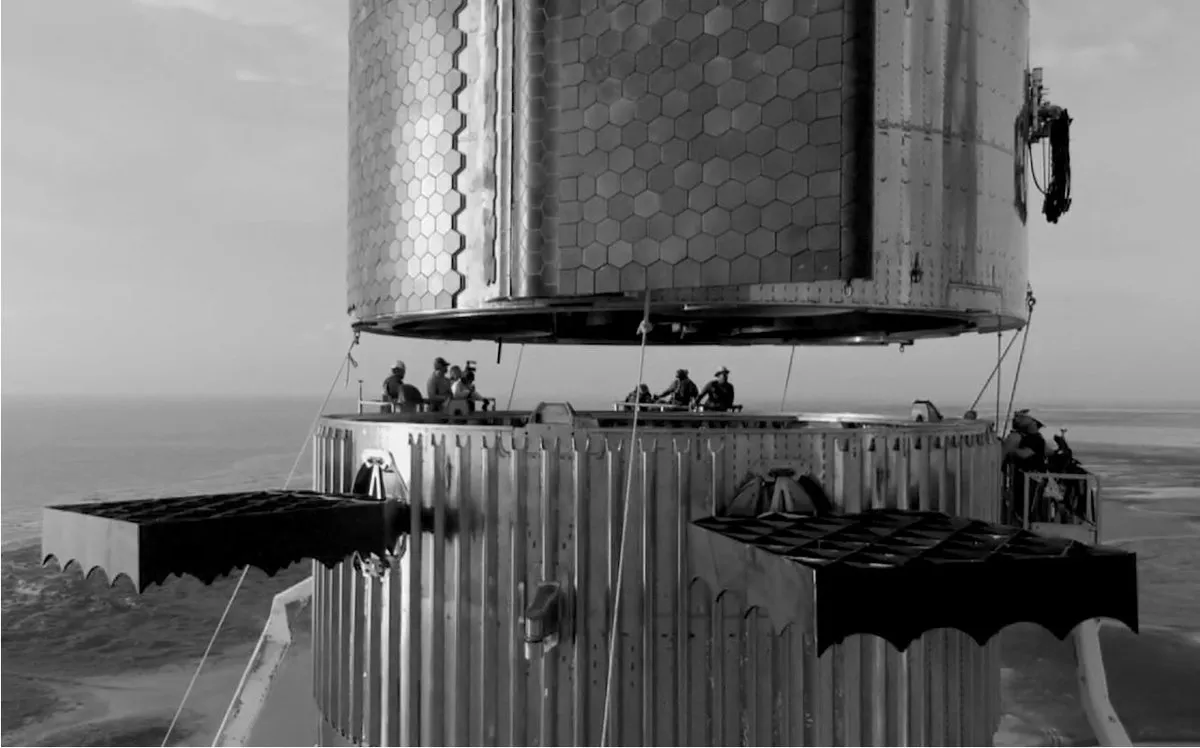



.jpg)

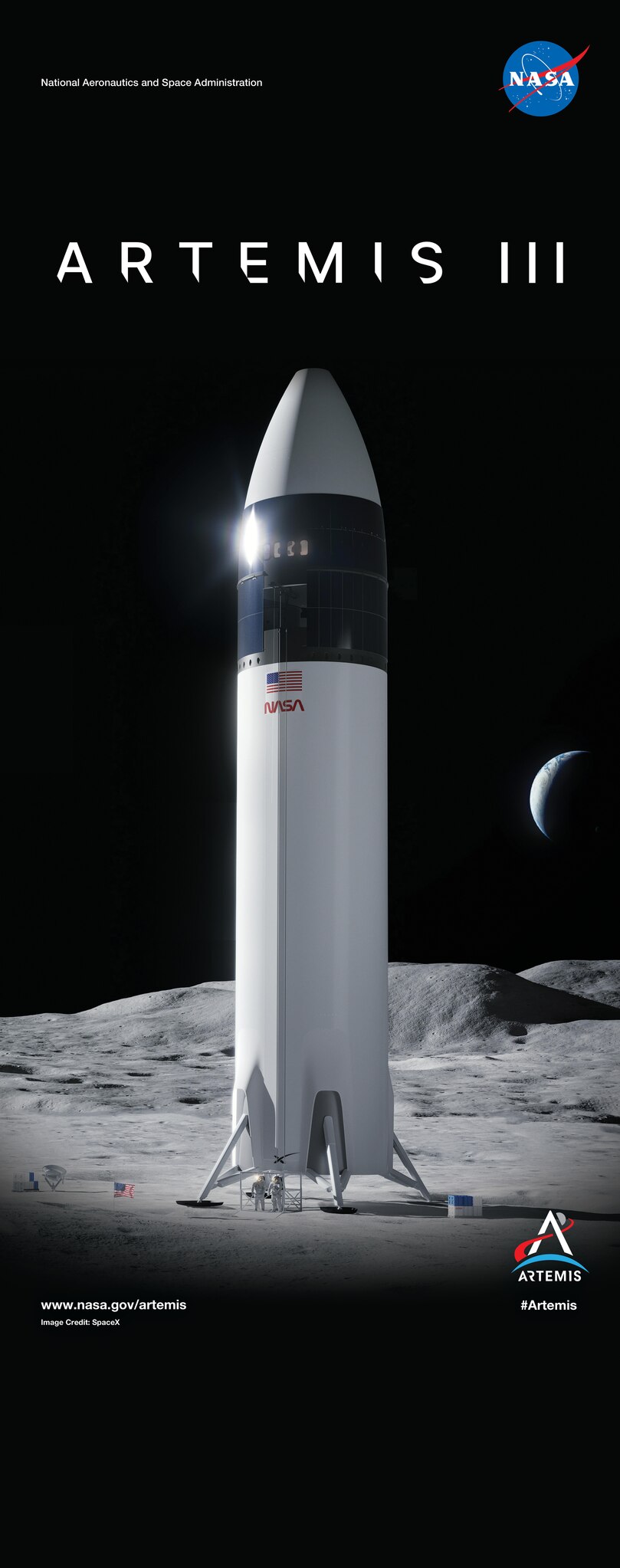
Living in central Florida I cannot wait for the new launch facility to come online. We're going to have lines of spectators into the space coast like we did for the shuttle.
If any of you are heading to Disney World you should stop by the NASA Kennedy Visitor Complex, it is so well done and not that expensive (it takes less time than 1 line at Disney world to get to :) ). It has the original launch control room for Apollo that you can tour, a Saturn V rocket that is laid horizontally and you can walk under, the crew module for the moon landing. My favorite part is the Atlantis shuttle suspended from the ceiling, they left it in its "raw" landed format with scorch marks and tiles, it looks absolutely amazing.